

 We are deep into the flu epidemic in France right now. At the hospital where I work in Paris some 20-30 people show up each day with flu symptoms. Our emergency department is overloaded and we have many flu patients in intensive care. The thing about flu is that it follows a different pattern every year. Last year was relatively quiet. But this year, the epidemic started earlier compared to 2023-2024, and the peak is very high.
As a Professor of Microbiology, my advice for avoiding seasonal flu and staying healthy is simple: get vaccinated. People who are vaccinated against the flu stand a much better chance of avoiding catching it. And if they do catch it, their symptoms will be much milder.
Vaccination is advised for anyone over 65 years of age and for those with suppressed immune systems. Public health campaigns on TV use catchy slogans such as ‘Flu is going to hurt like hell again this year’, and ‘Don’t let flu spoil your winter’ to encourage people to get vaccinated. Sadly, there is significant anti-vax sentiment in France which means that take-up is far too low.
One of my jobs at the hospital is to promote the flu vaccine to staff. Not just doctors and nurses, but midwives, pharmacists, and all healthcare professionals. We encourage these opinion leaders to share the fact that they have been vaccinated with colleagues and friends and to shout about it on social media. Through leading by example they prompt others to get vaccinated too. I spread the word by wearing a large badge proclaiming to the world ‘I’m protecting myself and will protect you too’.
Beyond vaccination, much of the good hygiene advice that we follow in the hospital is equally applicable in our homes and community. One of my favourite ad slogans sums it up very nicely: ‘Adopt good habits for controlling winter flu’. It’s common sense really. If you have flu symptoms then: wear a mask to avoid infecting others; get tested to establish whether you have flu or Covid; always sneeze into a single-use tissue or your elbow; and avoid cotton handkerchiefs which incubate viruses and are very unhygienic.
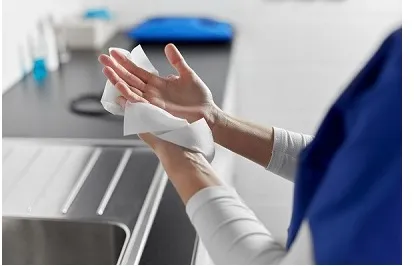
It goes without saying that good hand hygiene is a key factor in preventing the spread of respiratory diseases. Wash hands frequently and dry them with single-use towels - especially before a meal and after a visit to the bathroom. Rubbing hands with alcohol-based products is also extremely effective in killing bacteria. The small bottles and gels are easy to carry around and rubbing hands with them is quick, easy and an ideal solution for people on the go. In addition to its recommendation to avoid jet-air dryers in hospital washrooms and dry hands with paper towels instead, the respected French organisation for hygiene in hospitals, SF2H, specifically recommends rubbing hands with alcohol-based products and promotes it in the training of nursing staff.
Public health campaigns have been successful in influencing young people and those living in cities. They generally listen to the advice and adhere to it. However, we still have a way to go in getting through to the older generation and those living in more rural areas. Data shows that they are less likely to heed the guidance, continue to carry reusable handkerchiefs to catch coughs and sneezes, and resist wearing facemasks or getting vaccinated.
At the end of the day, education is an ongoing process. For my part, I continue to wear my badge with pride and to spread the word on good hygiene practices that are proven to help minimise the spread of respiratory infection – especially during the flu season.