
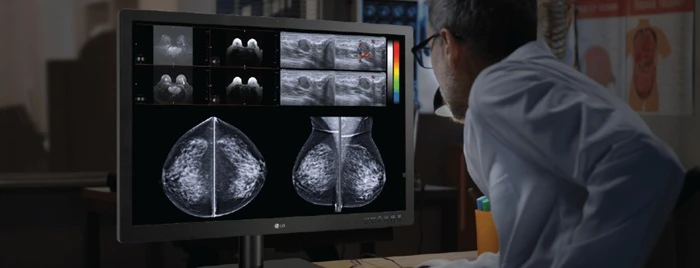
Medical imaging has become one of the most critical components of modern healthcare delivery. Hospitals and imaging providers continue to invest in advanced technologies such as CT, MRI, digital radiography, and digital breast tomosynthesis. However, regardless of how sophisticated imaging systems become, diagnostic confidence ultimately depends on how images are presented to clinicians. The diagnostic display remains a crucial link between image acquisition and clinical decision-making.
The importance of display quality has grown significantly as healthcare delivery models become more distributed. Radiologists are no longer confined to centralized reading rooms.
Teleradiology, regional imaging hubs, and home-based reporting environments have become increasingly common, enabling healthcare organizations to improve operational flexibility, address workforce shortages, and provide access to specialized expertise.

Source: LG Electronics
This transformation accelerated rapidly during the COVID-19 pandemic and continues today. Research published in 2025 reported that approximately 65% of healthcare institutions established home-reporting environments, while 74% transitioned routine daytime reading activities to internal teleradiology workflows. The same review found that 96% of radiologists experienced similar or improved report turnaround times while working remotely.
While the benefits are clear, distributed reading environments create new challenges for quality management. Traditionally, diagnostic displays were installed within controlled hospital reading rooms where calibration, maintenance, and quality assurance activities could be performed on-site. Today, displays may be located across multiple hospitals, outpatient imaging centers, and home offices.
For this reason, calibration and quality assurance programs are more important than ever. Diagnostic displays are not static devices. Over time, luminance, grayscale response, and display uniformity can gradually drift from their original specifications.
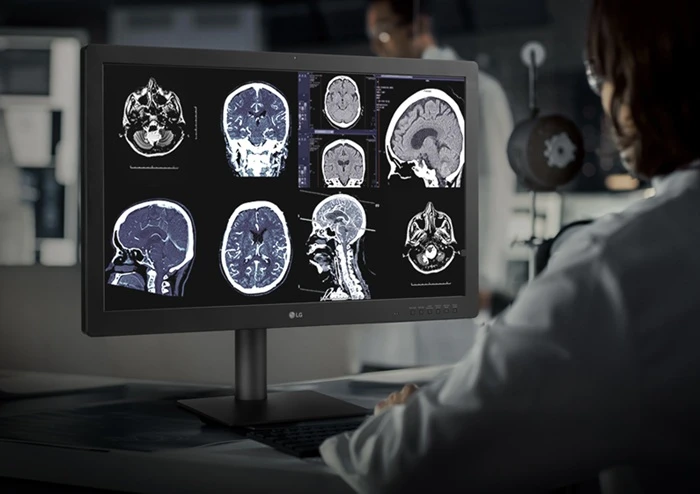
Source: LG Electronics
The growing importance of display quality management is reflected in recent guidance from the American Association of Physicists in Medicine (AAPM). Current recommendations emphasize that remote and distributed reading environments require structured quality management frameworks, including standardized QA procedures, environmental controls, documentation practices, and monitoring capabilities.
For large healthcare networks, the challenge extends beyond clinical quality to operational complexity. A healthcare system may operate dozens or even hundreds of diagnostic displays distributed across multiple facilities. Quality assurance teams must track calibration status, maintain performance records, support compliance activities, and prepare documentation for audits and accreditation reviews.
As a result, many healthcare organizations are moving toward centralized quality management strategies. See how this looks in practice in the LG Healthcare Solutions Brochure. Centralized systems provide visibility into display performance across an entire organization, allowing quality assurance teams to monitor status, schedule testing activities, and identify potential issues from a single management platform.
Consider a healthcare network operating several hospitals, regional imaging centers, and home-based reporting environments. Applying the same quality standards to every display through manual inspections and decentralized processes would require significant effort and coordination.
Beyond supporting diagnostic quality, healthcare organizations are increasingly seeking ways to reduce the administrative burden associated with managing large numbers of diagnostic displays. Centralized display management can simplify calibration activities, quality assurance processes, and compliance reporting across distributed healthcare environments. Automated monitoring and remote administration help reduce manual effort while improving operational efficiency and consistency across multiple facilities.
Integrated diagnostic display ecosystems can help support these objectives. Solutions that combine diagnostic displays with centralized management platforms allow organizations to monitor calibration status, oversee QA activities, and manage diagnostic displays across multiple locations more effectively. One practical example is LG Business Cloud Medical, a cloud-based platform designed to support centralized calibration management, performance monitoring, and QA workflows across multiple healthcare facilities. By enabling remote administration and consolidated reporting, such platforms can help healthcare organizations streamline compliance management, reduce administrative overhead, and maintain consistent diagnostic image quality across their networks.
.webp)
Source: LG Electronics
Ultimately, maintaining diagnostic image quality is no longer simply a matter of hardware performance. It requires a strategic approach that combines technology, governance, and operational efficiency. As teleradiology continues to expand and healthcare systems become increasingly connected, healthcare organizations that adopt structured quality management practices will be better positioned to support clinicians, strengthen regulatory readiness, and ensure consistent patient care across every location where diagnostic decisions are made.
Looking for a broader view of LG Healthcare Solutions? Read more in our Healthcare Solutions Brochure and explore LG's full healthcare portfolio, from diagnostic displays to patient room TVs, digital signage, and communication solutions. [Healthcare Brochure]
Have questions about calibration or strategy for your network? Get in touch with LG experts.
References
1. Technical Requirements and Optimization Strategies for Home-Based Teleradiology Workstations: A Review Article, European Radiology Experimental, 2025.
2. AAPM Medical Physics Practice Guideline (MPPG) 17.a: Quality Management for Mammography Review Workstation Displays, 2025.
3. AAPM Medical Physics Practice Guideline MPPG 17.a, Journal of Applied Clinical Medical Physics, 2025.