
Best Practices for Patient Safety: Reducing Errors in Healthcare
Kate Williamson, Editorial Team, European Hospital & Healthcare Management
Medical institutions must address healthcare safety through formal strategies because this stands as a vital healthcare need to eliminate errors. This article examines proven healthcare practices which involve effective communication systems and medication safety measures and infection control as well as technological integration and safety culture development. These practices promote better patient results while reducing surgical risks to provide both safe and errorless medical care to patients.
Introduction
Quality healthcare services depend fundamentally on maintaining safe care for patients. The various types of healthcare mistakes that include both incorrect medical diagnoses and medication mistakes and surgical errors and hospital-based infections represent major threats for both patients and healthcare providers. The World Health Organization (WHO) identifies unsafe care as a major contributor to worldwide death and disability incidents that rank among the top ten such causes. Healthcare providers need to execute proven error reduction methods because these methods improve patient results and increase system operational efficiency as well as generate public healthcare confidence.
The Role of Effective Communication in Patient Safety
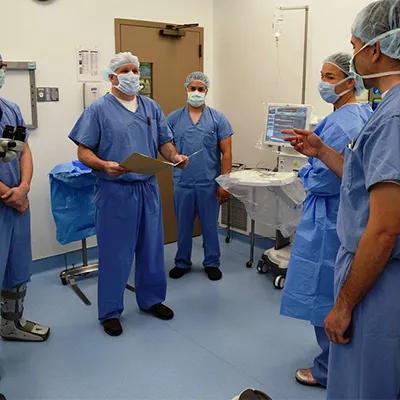
The achievement of safe patient care relies heavily on both excellent teamwork and effective communication methods. Healthcare errors mostly occur because healthcare staff and patients and caregivers lack clear communication with one another. The standardized tool SBAR (Situation, Background, Assessment, and Recommendation) provides a structure when exchanging important healthcare information which reduces mistaken meaning. The patient safety benefit of closed-loop communication arises from how it helps healthcare providers verify their instructions through repetition. Standardized handoff procedures help maintain the consistent transfer of important patient data from one shift to another and between different clinical departments. The practice of open dialogue in healthcare facilities enables staff to disclose both mistakes and near-miss events without facing punishment. Professional integration between physicians and nurses together with other healthcare staff members leads to improved coordination which results in better patient outcomes.
Reducing Medication Errors through Standardized Practices
Medication administration faults compose a major portion of incidents which could have been avoided. Standardization of medication administration procedures reduces risks during healthcare practice. Barcoded medication administration (BCMA) systems use barcodes to confirm patient identification combined with medication information which minimizes medication errors by humans. Computerized physician order entry (CPOE) systems reduce prescription errors by removing the need for physicians' handwriting and misreading of prescriptions. The high-risk medication double-check process provides additional assurance against mistakes. It helps to achieve both accuracy and protect against inappropriate dosing.
Education programs for medical staff regarding proper prescribing methods as well as drug administration protocols support sustainable safety practices in healthcare. Medication information must be detailed to tell patients proper dosage methods alongside complete knowledge of possible adverse reactions so they can follow recommendations safely.
Preventing Hospital-Acquired Infections (HAIs)
Hospitals expose patients to infections after admission that create significant safety risks and result in patients needing longer hospitalization as well as elevated healthcare expenses and increased chances of dying in hospital. The prevention of healthcare-acquired infections depends heavily on enforcing rigorous hand washing procedures and the application of alcohol-based sanitizers together with soap-and-water protocols. In addition to personal protective equipment (PPE) medical equipment requires proper sterilization procedures which boost infection prevention efforts. Decorative text shows Antibiotic stewardship programs serve as essential tools for supporting antibiotic prescription procedures which minimize antibiotic resistance and lead to correct antibiotic therapy.
Leveraging Technology to Enhance Patient Safety
Medical advancements through technology contribute to significant healthcare transformation while acting as a main factor in lowering healthcare mistakes. Through Electronic Health Record (EHR) systems, medical staff can achieve accurate documentation which eliminates both duplicate entries and lost data. The integration of decision-support systems within EHR platforms detects potential drug-to-drug reactions as well as medication restrictions. Medical software systems with artificial intelligence capabilities support the operation of early patient risk detection systems that recommend proactive healthcare solutions. The combination of AI-driven algorithms and machine learning models leads to predicting declining patient conditions which triggers medical staff alerts to potential health hazards and supports precise diagnosis and early disease detecting abilities. Smart technology together with automation methods enable organizations to eliminate human-based operations which leads to higher performance rates and more reliable results.
Building a Culture of Safety in Healthcare Organizations
The development of safety-focused organizational cultures promotes organizational accountability through continuous enhancements of patient treatment quality. Hospital administrators should demonstrate commitment to patient safety by spending necessary funds and establishing safety-supporting policies. A non-punitive reporting system for errors generates better system-wide improvements because it enables healthcare staff to freely report mistakes. Standard training delivered through simulated learnings teaches medical staff to manage stressful events thus enhancing their capacity to handle emergency situations in realistic settings.
The combination between patient safety workshops and certification programs provides an opportunity to achieve competency while practicing best practices.
Improving Diagnostic Accuracy and Reducing Errors
Incorrect medical diagnoses frequently result in improper therapeutic choices and supportable delays with their accompanying additional problems. Healthcare providers obtain accurate diagnoses through decision-support tools which include clinical decision-support systems (CDSS). Hospital practices that promote second professional evaluations and team approach for challenging cases provide complete assessments of complex medical cases. A culture of diagnosis investigation along with physical examination and patient history remains essential for accurate diagnoses so medical professionals need to adopt questioning attitudes to confirm their diagnoses through additional inquiries.
Ensuring Surgical Safety and Reducing Errors
Healthcare institutions and patients suffer substantial damage from both wrong-site surgery and retained surgical instruments during surgical procedures. Healthcare facilities need to implement the WHO Surgical Safety Checklist for confirming patient information together with surgical area and procedural requirements before starting a procedure. Procedure interruptions check multiple times to validate that every required safety protocol is established prior to continuation. Considerable attention must be directed toward postoperative patient monitoring because healthcare providers need to detect toxic signs such as infections and hemorrhage. Doctors should explain detailed instructions after operations to both patients and family caretakers for successful post-operative healing without medical issues.
Empowering Patients to Enhance Safety
Both patient safety along with superior clinical results become achievable through active involvement in medical care. Patient education represents a fundamental component in healthcare because patients need clear access to information about treatment strategies as well as medications and anticipated results. The practice of helping patients ask for explanations helps patients become more engaged participants in their healthcare treatment. The healthcare partnership between patients and providers through shared decisions establishes patient-centered plans through interaction that upholds both evidence-based results and individual preferences. Patients who have received sufficient information alongside being actively involved in healthcare decisions show better adherence to medical treatments and quicker concern reporting which decreases treatment complications and errors.
Conclusion
Healthcare providers together with administrators and policymakers as well as patients carry collective responsibility for patient safety through coordinated teamwork. Patient safety will enhance through best practice implementation which combines standardized communication and medication safety protocols with infection control attempts together with technological advances and open transparency policies. System effectiveness and efficiency will improve through sustained dedication to staff training combined with research initiatives and system development work which will maintain patient safety as an organized healthcare objective. A focus on continuous enhancement through such practices makes it possible to achieve patient-centered healthcare excellence along with high-quality and safe care for both healthcare providers and patients. Continuous healthcare innovation and quality advancement goals represent a commitment from organizations which leads to better patient protection and reduced preventable medical incidents.

Kate, Editorial Team at European Hospital & Healthcare Management, leverages her extensive background in Healthcare communication to craft insightful and accessible content. With a passion for translating complex Healthcare concepts, Kate contributes to the team's mission of delivering up-to-date and impactful information to the global Healthcare community.