
Building a Heart Team in Azerbaijan and Overcome All Obstacles to Provide Modern Cardiac Care
Farid Aliyev, Associate Professor, Director of Heart Center, Baku Health Center
Dr. Vusal Haciyev, Cardiac Surgeon, Baku Health Center
The heart team has emerged as the gold standard in contemporary cardiovascular medicine, where a diverse, multidisciplinary group of specialists collaborates to tackle complex heart diseases. By integrating the expertise of cardiologists, cardiac surgeons, anesthesiologists, radiologists, nurse practitioners, and physician assistants, these teams develop tailored treatment plans that yield exceptional patient outcomes. However, while heart teams are commonplace in many developed countries, their implementation remains a challenge in others, particularly in Azerbaijan, where a post-Soviet mentality continues to influence the medical landscape.
Embracing Medical Innovations to Enhance Cardiac Care
At Heart center of Baku Health Center, adopting groundbreaking medical innovations has been a cornerstone of our journey to modernize cardiac care. We have integrated state-of-the-art technologies, including 3-D mapping systems for cardiac arrhythmia ablation and wearable health devices for real-time patient monitoring. These tools enhance diagnostic accuracy and treatment outcomes while reducing risks and improving efficiency.
Cryoablation systems and pulsed field ablation have revolutionized arrhythmia management, offering safer, faster, and more effective procedures. The introduction of leadless pacemakers and subcutaneous ICDs has further expanded our capabilities, ensuring that patients receive minimally invasive yet highly advanced care.
Our center has also invested in minimally invasive cardiac surgery equipment, allowing us to perform complex procedures with reduced trauma, quicker recovery times, and better cosmetic outcomes for patients. This technology includes advanced thoracoscopic systems.
Breaking down Traditional Hierarchies
In many post-Soviet healthcare systems, medical decisions often adhere to a top-down approach, where senior doctors are the sole decision-makers. This structure can hinder collaboration, necessitating a shift away from rigid hierarchies. At Baku Health Center, we focused on promoting shared decision-making. Through seminars and workshops, we demonstrated the power of interdisciplinary collaboration in addressing difficult cases and how working together can enhance patient outcomes.
We encouraged senior doctors to act as mentors while fostering an environment of shared decision-making among junior colleagues. Everyone's voice was valued, transcending traditional ranks. By embracing openness and dismantling conventional hierarchies, we laid the groundwork for true multidisciplinary practice.
Overcoming Resource Constraints
Creating an effective heart team—ideally including imaging specialists and procedural experts—can be challenging in a healthcare environment constrained by shortages of specialized equipment, communication systems, and trained personnel. To address these limitations, we made targeted investments in critical technology and forged partnerships with other facilities and suppliers, ensuring our heart team had access to the tools necessary for delivering high-quality care. Additionally, we expanded our team by recruiting many Azerbaijani doctors who completed their studies in Europe, bringing valuable international expertise and modern perspectives to enhance our team's capabilities.
We prioritized recruiting team members who shared our vision of collaboration over competition. Gradually, we built a cohesive team dedicated to transforming cardiac care in Azerbaijan.
Reorienting Medical Training
Azerbaijan's healthcare system has traditionally trained professionals to work independently rather than collaboratively. To address this issue, we conducted workshops focused on interdisciplinary skills, patient-centered care, and teamwork.
We hosted an international workshop led by experts who introduced various global best practices in cardiac care. Regular case discussions provided opportunities for professionals to learn from one another, transforming our team into a finely tuned, high-performance unit capable of managing the most complex cardiac scenarios.
Navigating Financial Limitations
Financial constraints often pose significant obstacles to establishing a heart team, particularly within publicly funded healthcare systems. However, we remained committed to demonstrating that a multifaceted approach can yield long-term cost savings. By presenting data on significantly reduced repeat interventions and shorter hospital stays, we showed that investing in a heart team could decrease overall costs.
A significant turning point in overcoming financial challenges was the implementation of İcbari Tibbi Sığorta (Mandatory Health Insurance) in Azerbaijan. This system covers most cardiac procedures, making advanced care accessible to a larger segment of the population. However, as modern cardiac medicine is highly cost-demanding—requiring expensive equipment, medications, and consumables—the insurance coverage has its limitations. To bridge this gap, we actively seek additional financial resources.
Heydar Aliyev Foundation, which has been instrumental in supporting critical projects and ensuring the continuity of care for patients who might otherwise face financial barriers. Through partnerships with foundations and private entities, we aim to maintain the highest standards of cardiac care while minimizing the financial burden on patients.
Our funding strategy combines support from İcbari Tibbi Sığorta, government backing, and contributions from foundations, making our heart team a sustainable and effective model for delivering comprehensive cardiac care.
Shifting Patient Attitudes toward Authority
In post-Soviet cultures, patients often expect a single authoritative doctor to oversee their treatment. This reliance can create confusion or fear regarding team-based decision-making. Recognizing that patient trust is crucial to our heart team's success, we invested in education and communication to foster understanding and confidence.
We adopted a straightforward approach, explaining in layman's terms how the heart team integrates diverse perspectives to achieve optimal outcomes. As patients witnessed the collective expertise involved in their care, trust developed, and perceptions of team-based medical care began to shift.
To further enhance patient satisfaction and care quality, we invited specialists in quality management and communication from Turkey. These experts conducted training sessions with our team, focusing on improving patient interactions and implementing international standards for quality assurance. Their guidance played a pivotal role in refining how we deliver care, ensuring a patient-centered approach that aligns with global best practices.
Establishing a New Standard of Cardiac Care in Azerbaijan
The Baku Health Center’s heart team has become a model for innovation and collaboration—achieved through dedicated effort and strategic planning. As the first of its kind in Azerbaijan, we are setting a precedent for other facilities in the region and advocating for comprehensive cardiology care nationwide.
Our journey is far from complete. Our patients deserve the best, and we are committed to continuous improvement every year. We are not only transforming medicine at Baku Health Center; we are shaping a brighter future for heart health in Azerbaijan.
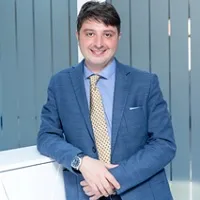
Farid Aliyev is a cardiologist primarily involved in the fields of cardiac electrophysiology, cardiac pacing, defibrillation, and cardiac resynchronization therapy. He is the director of the cardiology and cardiovascular surgery program at Baku Health Center and a lecturer at I.M. Sechenov First Moscow State Medical University. He is a past president of the Azerbaijan Society of Cardiology and is actively involved in research as well as the education of the young generation of physicians in Azerbaijan.
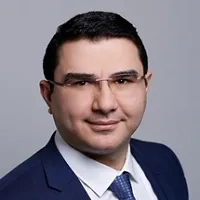
Dr. Vusal Haciyev is an accomplished cardiac surgeon with extensive international experience in complex cardiovascular surgeries. He holds a Ph.D. from Charité-Berlin Medical University in Germany, specializing in heart transplantation outcomes. Currently based in Baku, Azerbaijan, at Baku Health Center he performs a wide range of advanced cardiac procedures, including high-risk operations and valve reconstructions. Dr. Haciyev is also actively involved in education, research, and mentoring the next generation of cardiac specialists. Fluent in several languages, he is a recognized contributor to international conferences and journals in the field of cardiac surgery.