
From Brain to Machine: How AI Is Transforming Neuroscientific Research
Kate Williamson, Editorial Team, European Hospital & Healthcare Management
Neuroscience has been transformed by AI, where they help in data processing, anticipation of the brain responses, interpretation of neurons, revealing the latent structure, catering to the individual patient’s needs and expediting the process of discovery of drugs. This combined effort also has the capacity to revolutionize approaches to the diagnosis and management of neurological disorders by enhancing the rate of discoveries in brain disorders and cures.
Introduction:
Neuroscience as a scientific discipline was the outcome of curiosity that human beings have always had towards the formation and working of the organ that is the brain. As AI has emerged as an important topic of study, this exploration has reached new heights, providing tools and insights that were earlier unimaginable. This article will explore innovative ways that AI offers solutions to the problems that remain decisive for researchers studying the brain.
Understanding the Basics
Neurology is a sub specialty of medicine which focuses on the nervous system which entails the brain and the spinal cord and the connections between the neurons. Experts in this area draw focus towards understanding of; how these parts harmonize in behaving as per the individual’s cognition and other body functions’ enactments. Historically, the process of neuroscience analysis required experts to go through the results of imaging and experiments manually.
Artificial Intelligence (AI) on the other hand is defined as structured systems in the computers that are capable of doing tasks that only humans can do. These are tasks such as training, classification, and prediction. Machine learning and deep learning which the subfield of AI are being used as tools to examine the immense neuroscience data to find out something new.
How AI is Transforming Neuroscience
1. Enhanced Data Analysis
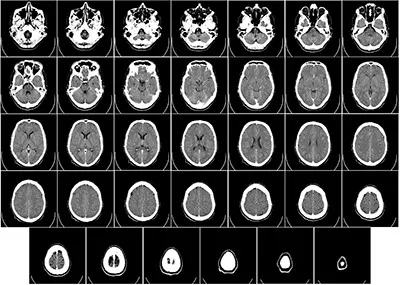
Neuroscience as a field produces a large volume of data especially through imaging procedures such as MRI (Magnetic Resonance Imaging) and fMRI (Functional MRI). Manual analysis of such data is a tiresome and is mostly associated with high chances of producing erroneous results. Computational AI approaches can form and analyze high volume datasets in the shortest amount of time. For instance, deep learning algorithms can spot patterns in medical imaging which may not be conspicuous to a human such as determining whether a patient is likely to have neurological disorders such as Alzheimer or Parkinson’s disease.
2. Predicting Brain Function and Behavior
It is also possible to teach AI systems to predict how several regions of the brain are going to react to specific inputs. In simple terms, it can integrate brain scanning data and behavioral data of individuals so as to predict the kind of behaviors or cognitive ability that the patient may have and the kind of treatment they need. This ability of predicting the brain function will aid the researchers in executing effective experiments and coming up with better treatment methods.
3. Decoding Neural Activity
Possibly, one of the most prominent uses of AI in neuroscience is in decoding neural activity. Neural coverage makes it possible for the algorithms to analyze neural signals, and convert them to useful data. For example, procedures to decode speech and movement dynamics from the brain have been created with the help of AI. These brain-computer interfaces (BCIs) can help those with disabilities by having the pattern of the subjects’ brain activity translate into commands for a prosthesis or computer systems.
4. Uncovering Hidden Patterns
The human brain is still one of the most complex organs in the human body with many networks and connections which are hard to describe. Conventional tools would not be capable of identifying systemic trends in the brain’s activity that AI can detect. For instance, deep learning systems can determine specific neural connections that correspond with various cognitive statuses or even mental disorders; this gives scientists fresh ideas regarding the human brain.
5. Personalized Medicine
Currently, AI can also aid in neuroscience to impact personalized medicine in the following manner. Incorporating capabilities of analyzing the functional MRI and genetic data, it is possible to introduce a treatment plan specific to the patient’s brain characteristics. This approach is especially beneficial in the neurological disorders also because it enhances the results by the consistent care plans and reduces the side effects as well.
6. Accelerating Drug Discovery
In treating neurological disorders, drugs are usually screened and only a few that proves effective are used for treatment. AI can facilitate this process by also predicting the behaviour of composite compounds with the brain’s target receptors. ML could be very useful to refine the existing medical research data in order to find potential drug candidates and estimate the further successfulness of the particular drugs or compounds creation.
Challenges and Future Directions
AI in neuroscience has the potential of bringing about positive change but there are challenges that come with this adoption. Patient privacy is highly relevant as the scans and genetic results are personal and informative about the individual. Researchers should gather data and should use the information in the right manner. Moreover, the only problem in AI models is that they mimic a human’s scenario depending on the data fed to them or trained on. It is therefore important that raw data being fed to AI systems are correct, manifold and have samples from the target population.
To conclude, the future of the AI in handling of the neuroscience is promising. With the developments in the AI technology and the continuous research being conducted in neuroscience; more developments in the knowledge about the human brain can be expected. AI continues to evolve, it will occupy a more and more significant position in the exploration of the mysteries of the human brain.
Conclusion
It is quite clear that a merger of AI and neuroscience is revolutionizing the process of analyzing the human brain and its functions. It is doing so by improving on data analysis, the ability to guess what will happen to a brain activity, code generated from neural signals and discovery of hidden patterns. As this collaboration strengthens, one should anticipate that the knowledge about the brain as well as the therapeutic strategies for the neurological disorders will further expand. We are only in the beginning of the process of transferring human brain to machine and the opportunities are endless.

Kate, Editorial Team at European Hospital & Healthcare Management, leverages her extensive background in Healthcare communication to craft insightful and accessible content. With a passion for translating complex Healthcare concepts, Kate contributes to the team's mission of delivering up-to-date and impactful information to the global Healthcare community.