
Frugal Innovation for Green Surgery: A Low-Carbon Blueprint from India for Europe
Dr. Gnanaraj Jesudian, Founder Director, Rural Surgery Innovations
This article explores how frugal surgical innovations developed in rural India can help European hospitals reduce carbon emissions, lower costs, and improve access to care. It highlights low-energy imaging, gasless laparoscopy and reusable instruments as practical solutions for sustainable surgery while maintaining clinical safety, supporting healthcare decarbonisation and strengthening rural surgical resilience.
Introduction:
The global healthcare sector is trapped in a profound climate paradox: it is responsible for roughly 4.4% to 5% of global greenhouse gas (GHG) emissions, yet it bears the brunt of treating the health crises accelerated by climate change 1. Inside the hospital, the operating room (OR) is a notorious carbon and resource hotspot, consuming three to six times more energy than standard clinical wards and generating up to 33% of total institutional waste 2.
The frugal methods perfected in rural India offer European hospitals concrete pathways to decarbonisation:
Adopting Low-Wattage, Solid-State Imaging:
European ambulatory surgical centers and day-case units can implement laptop- or tablet-powered digital scopes for minor diagnostic and therapeutic procedures. This bypasses the need to power up full-scale laparoscopic towers, slashing baseline electricity consumption and extending the lifespan of premium hardware.
The Laptop Cystoscope 3 included in the 2024 compendium of innovative medical devices for resource-poor settings, could easily replace the need for outpatients going to operating rooms for diagnostic cystoscopies and minor procedures like DJ stenting or stent removals. Similar technologies could be used for other scopes, like Hysteroscopes.
Transitioning to Isobaric, Gasless Frameworks for Day Surgeries:
Incorporating mechanical abdominal wall lifters for routine, minor interventions (such as tubal ligations or diagnostic laparoscopies) allows European centers to scale up regional anaesthesia blocks. This drastically cuts down on volatile gas emissions and shortens recovery room times. Gas Insufflation Less Laparoscopic Surgery (GILLS): GILLS replaces conventional 4 carbon dioxide insufflation with a spiral ring attached to a mechanical device, which physically lifts the abdominal wall 5 This simple mechanical lift provides the necessary surgical working space, eliminating the need for expensive gases and specialised insufflation equipment.
Gasless laparoscopy and a laptop-based cystoscope can increase surgical access by 20% while delivering substantial carbon savings per intervention cycle and per case. It positions frugal innovation as a dual-benefit approach: expanding essential surgery in resource-limited settings and advancing green surgery 6.
Embracing Circular Economy Logistics:
The reliance on robust, autoclavable, and reusable instruments inherent to the GILLS framework directly tackles the single-use plastic crisis. By adopting these design philosophies, Western hospitals can significantly de-risk their supply chains and reduce their Scope 3 waste overheads.
Clinical Outcomes and Safety
Frugal does not mean compromise. Studies 7 and field reports show GILLS delivers equivalent or superior outcomes in selected procedures (ovarian cystectomies, appendectomies, ectopic pregnancies, tubal ligations). Surgeons report good working space, reduced post-operative pain, and faster recovery. Complication rates remain low when proper training is provided. The techniques increase surgical volume in underserved areas by 20% or more by making MIS feasible locally.
Implementation Pathways for European Rural Surgery
European rural hospitals, facing long supply chains, staff shortages, and ambitious net-zero targets, stand to gain significantly.
- Hybrid Adoption: Integrate gasless techniques for suitable cases (e.g., gynaecology, general surgery) alongside conventional tools.
- Rural Resilience: Low-power, portable systems reduce dependency on stable high-voltage supplies and complex maintenance.
- Cost and Waste Synergies: Reusables and modular devices cut procurement costs and plastic waste by over 80% in some models.
- Training Models: Tele-mentoring and low-fidelity simulation, already common in global surgery, can accelerate safe adoption.
Pilot programs in the NHS or Scandinavian rural networks could measure triple-bottom-line outcomes: clinical, financial, and environmental.
Challenges and Enablers
Challenges include learning curves, regulatory approval for adapted devices, and surgeon familiarity with regional anaesthesia. Solutions involve structured proctorship, collaboration with organisations like the Association of Rural Surgeons of India, and EU-funded green innovation grants. Strong leadership from hospital executives, green surgery champions in theatres, and integration with existing sustainability dashboards will drive success.
Conclusion:
A Scalable Blueprint
By embracing this low-carbon blueprint, European surgical leaders can reduce emissions, lower costs, improve access, and demonstrate genuine global leadership in sustainable healthcare. The operating room of the future may well be inspired by the ingenuity of rural innovators today.
References:
- Chen-Xu, J., Corda, M., Varga, O., & Viegas, S. (2024). Health burden and costs attributable to the carbon footprint of the health sector in the European Union.. Environment international, 190, 108828 . https://doi.org/10.1016/j.envint.2024.108828
- Wu, S., & Cerceo, E. (2021). Sustainability Initiatives in the Operating Room.. Joint Commission journal on quality and patient safety. https://doi.org/10.1016/j.jcjq.2021.06.010
- World Health Organization. WHO compendium of innovative health technologies for low-resource settings 2024. Geneva: World Health Organization; 2024. ISBN: 978-92-4-009521-2. Laptop Cystoscope, pp. 72–74. Available at: WHO Compendium of Innovative Health Technologies for Low-Resource Settings 2024
- Dawkins, B., Aruparayil, N., Ensor, T., Gnanaraj, J., Brown, J., Jayne, D., et al. (2022). Cost-effectiveness of gasless laparoscopy as a means to increase provision of minimally invasive surgery for abdominal conditions in rural North-East India. PLoS ONE, 17(8), e0271559.
- Gnanaraj, J., Aruparayil, N., Mishra, A., Bains, L., & Jain, M. (2020). Evaluation of Gasless Laparoscopy as a Tool for Minimal Access Surgery in Low-to Middle-Income Countries: A Phase II Noninferiority Randomized Controlled Study. Journal of the American College of Surgeons, 231(5), 589–601.
- Jesudian, G., Janszen, E., & N. (2026). Frugal Surgical Innovations for a Greener Global Health Landscape. Christian Journal for Global Health. https://doi.org/10.15566/7h408j04
- Mallik, A., Jesudian, G., & Mothes, H. (2025). Analysis of the impact of gas insufflation-less laparoscopic surgery (GILLS) in selected rural hospitals in India. Journal of Global Surgery (ONE) 1(1), 41–51. https://doi.org/10.52648/JoGS.1186
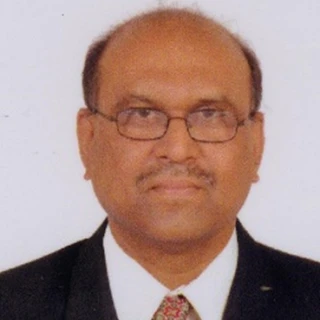
Gnanaraj Jesudian is a urologist and general surgeon from CMC Vellore who has worked in rural and remote areas for over four decades. He has performed over 100,000 surgical procedures and established minimally invasive surgery (MIS) services in 78 rural hospitals. He has received several innovation awards, including the DST–Lockheed Martin Award, GE Healthcare Award, and Millennium Alliance Award. He is working on gas insufflation-less laparoscopic surgery and laptop cystoscopy, both listed in the WHO Compendium. He has over 425 publications (with more than 890 citations) and serves as Secretary of the IFRS, Past President of ARSI, and a member of the Board of Directors of the G4 Alliance.