
How the EU is Addressing Health Inequalities among Member States?
Debi Jones, Editorial Team, European Hospital & Healthcare Management
The European Union (EU) counters health disparities between member states through partnership, financial contributions and advocacy for universal access to health systems. These are EU Health Strategy and related initiatives, the EU4Health Programme and the Cohesion policy. These are intended to eliminate differences in health risks, opportunities, and access to care related to socio-economic, geographic, and life styles of individuals and communities.
Introduction:
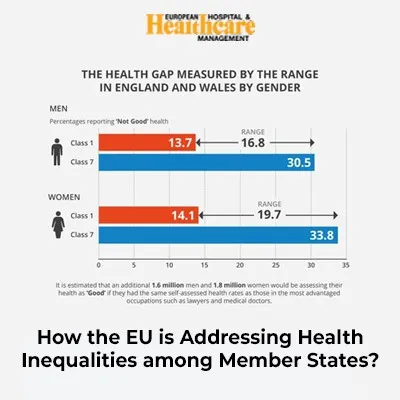
Health disparities as used in this article concerns the variations in health needs, provisioning, as well as health risks that are experienced between populations. It is worse in the European Union (EU) where inequalities are attributed not only between groups of population within countries, but also between countries. The EU is aware of these disparities and has put measures that will enhance equal treatment in the health sector with a view of enhancing health standards.
1. Understanding Health Inequalities in the EU
A number of antecedents have been identified in relation to health inequality in the EU and these include socio-economic status, geographical location, life style and access to health care. For instance, a compiled group of population of the developed countries is healthier than the one of the developing countries. Its effects are still like those observed in the rural areas, where individuals have limited access to comprehensive healthcare services than in urban places. Moreover, low-income people, migrants and elderly bad health because they often do not have money and people around to whom they can turn to for help.
2. The Role of the EU in Reducing Health Inequalities
While healthcare systems are a matter of concern of individual member states, EU has a crucial role in reinforcing cooperation and giving support to decrease health gaps. The regulations performed by the EU are based on the principle of solidarity with the objective of making people alive all over the European Union have the same rights to health care provision as people from other European country.
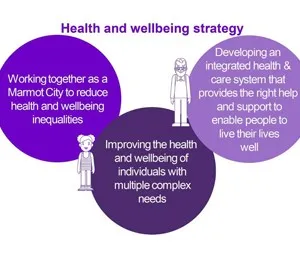
A primary approach of the EU to health inequalities’ reduction is through cooperation and exchange of information and best practices between member states. This means that those systems in the less developed countries can emulate those systems which are more developed. This is on top of the fact that the EU also funds initiatives through various funds and other related programmes which have the intent to tap the gaps.
3. EU Health Strategies and Initiatives
The EU has instituted policies and programs for delivering health that seeks to regulate the health inequalities. Some of the key strategies include:
- EU Health Strategy: The EU Health Strategy was set based on three main objectives that include improving the health of citizen, reducing disparities in health and ensuring people have equal access to health services. The strategy call upon member states to coordinate their efforts in such fields as research, health promotion and disease prevention.
- European Pillar of Social Rights: Among these rights, the availability of school, quality healthcare, food, and shelter, with a minimum wage has made it easy for everyone to get health care as a basic right. It also seeks to at least narrow the provision of health care between social classes since aspects like poverty, unemployment, and social marginalization negatively impend on wellbeing.
- EU4Health Programme: Established in response to the COVID-19, this program is one of the largest European Union health related programs. Its objective includes health system improvement, enhanced health preparedness, and better health equity in the EU. The program makes available financial support for the implementation of projects that are intended to increase the delivery of medical facilities, though the focus is made particularly on those countries that have a relatively low level of developed health care services.
- Cohesion Policy and Structural Funds: The EU utilizes the cohesion policy to ensure that backward regions receive funds to enhance their overall health care systems and facilities. Aggregate amounts are spent through Structural funds as the European Regional Development Fund (ERDF) and through the European Social fund (ESF) Health and wellbeing as well as related social inclusion are also financed.
4. Addressing Socioeconomic and Geographic Disparities
Therefore, the EU has understood that health inequalities depend a lot on the socioeconomic status and geographic location of people. In order to do so, the EU encourages policies that focus on endangered ones, with major attention being paid to the following factors: For example, the European Social Fund Plus (ESF+) targets the following areas of health care accessibility for disadvantageous categories including migrants, persons with low income as well as living in the rural or distant areas. It also supports educational and training on improving the skills of the healthcare providers in order to meet the needs of the diverse communities.
Moreover, the EU encourages the utilization of information technology in medical systems as telemedicine to increase the options of the physicians in isolated areas. This assists in the overcoming of the paradox as people living in areas remote from urban centers, where the density of healthcare facilities in higher, are included in the service.
5. Tackling Health Inequalities Related to Lifestyle and Chronic Diseases
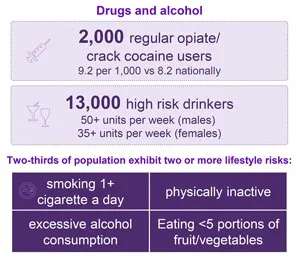
Other diseases that affect health care disparities include diabetes, heart diseases, and cancers; whose causes are preventable but arise due to differences in diets, exercises, and consumption of cigarettes. Health promotion campaigns, and there is evidence of an EU supporting such programs and that seek to help change people’s behaviours to adopt healthier ones and to prevent diseases. For instance, the EU has started implementing public health promotion of campaigns against the use of tobacco, unhealthy diet, and alcohol substance.
The EU also supports research and innovation to gain insight of the risk factors of chronic diseases and ways of controlling or eradicating the diseases. This aims to make it possible for all the member states to be in touch with the new trends in treatment and advancements in medical field so as to be in a position to close the gap between the developed and the less developed health sectors.
6. Monitoring and Evaluating Progress
To make sure actions taken do contribute to achieving better health, the EU systematically assesses new health inequalities, as well as the impact of actions taken. One such use is the European Health Equity Status Report Initiative (EHESRI). This report characterizes health inequalities in the EU and serves an informative basis for the choices that should be made in the future.
It also recommend member states to adopt national Health promotion and EU health inequalities strategies and to provide periodic reports. This way the EU maintains a focus on the member’s states to keep the goal of closing the health gap accountable and transparent.
Conclusion
The EU has interest in addressing the health inequalities in its member countries in different ways and measures. Through partnership, funding, social and regional equity the EU seeks to provide quality healthcare to all citizens irrespective of their social or geographical background.
Although there is still a very long way to go, both in terms of evaluating progress and in terms of spending on health systems, these trends represent progress toward the EU’s goals of achieving health equity.

Debi Jones, part of the Editorial Team at European Hospital & Healthcare Management, draws on her deep experience in healthcare communication to produce clear and impactful content. Her dedication to simplifying intricate healthcare topics helps the team fulfill its goal of offering relevant and influential information to the international healthcare sector.