
Leveraging Telemedicine to Enhance Business Operations in Healthcare
Kate Williamson, Editorial Team, European Hospital & Healthcare Management
Telemedicine is effective in changing the practices of delivering health care services and it influences efficiency and productivity of the services and clients or patients. By becoming virtual and maintaining the data security of patients, the healthcare businesses can cut the expenses and become more accessible to grow. Implementing telemedicine improves the organization’s efficiency and in the long term minimizes the impact of change on providers.

Introduction:
Telemedicine is where services of a traditional doctor patient relationship are provided but the doctor is distant from the patient. Telemedicine is among the most promising trends in the contemporary system of healthcare. This makes it possible for the healthcare providers to prescribe, and monitor patients, even give medical advice to patients without the need of the patient attending a clinic or a hospital physically. It has not only brought the delivery of services closer to the patients but also has brought with it many advantages for health care business. It examines how the implementation of telemedicine in the overall work within healthcare businesses can contribute towards the organization’s growth and more efficiency.
1. Streamlining Operations
Telemedicine is a vital solution that can help make considerable improvements to the healthcare management processes as it drastically decreases the number of patients’ visits.
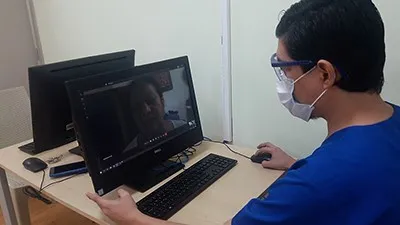
Such a change assists healthcare providers to optimize their time and reduces the overall time spent on the appointments when compared to the traditional techniques.
1.1. Efficient Scheduling and Reduced No-Shows
The telemedicine solutions can include booking, rescheduling, or cancelling the appointments with the help of a few clicks.
This feature cuts on administrative work and ensures that the number of patients who fail to show up for appointment is considerably decreased because people are more likely to attend virtual appointments than in-person ones.
1.2. Lower Overhead Costs
Given that the number of patients visiting, the healthcare businesses have reduced, there are chances to cut on expenses such as premises, utilities, and employees. It also gives practices an opportunity to direct the funds elsewhere, for instance offering other services within the practice or procuring complex equipment’s.
2. Expanding Service Offerings
Telemedicine is ideal for extending healthcare businesses’ portfolios and serve new populations. This in turn means that through virtual consultations, healthcare providers are able to get new patients while at the same time providing services that could not be done before.

2.1. Access to Specialist Care
By embracing telemedicine, patient in rural, hard-to-reach, or even distant areas can consult special needs’ practitioners without being required to spend many hours on the road. Specialists can help healthcare businesses expand their services and satisfy patients since companies can provide teleconsultation services in specialties with which they are not directly related.
2.2. Enhanced Chronic Disease Management
For patients with chronic conditions, telecommunication has the added advantage of remote follow-ups without having to be physically examined often. Consequently, healthcare personnel improve the observance of the patient, modify the strategy of therapy, and therefore, make the necessary corrections, chronic diseases can be controlled effectively, and patients’ outcomes can be enhanced.
3. Improving Patient Engagement and Satisfaction
Patients are part of any healthcare business and cannot be underrated, which means that satisfaction is crucial in this area. Thus, telemedicine positively impacts both due to the increased availability and flexibility of the care.

3.1. Convenience and Accessibility
Patients appreciate the fact that, they do not have to come to the hospital for consultations and follow ups hence no need for time off work or even arrangements. Such increase in accessibility also leads to better patient satisfaction and increased compliance with the set treatment regimens.
3.2. Personalized Care
Additional components of telemedicine solutions include secure messaging as well as the possibility of video consultations. These tools help the healthcare providers to engage with the patient, respond to any query and manage the care to the patient within the shortest time.
4. Enhancing Data Management and Security

This has to do with protecting data for any healthcare business, medical practices included. Telemedicine sites feature data management systems that allow the convenient handling of patients’ records with confidentiality in mind.
4.1. Integrated Electronic Health Records (EHR)
Most telemedicine systems are compatible with Electronic Health Records so that the virtual consult can be easily documented. This integration helps to ensure that all records of patient are available and updated for all competent health care professionals so that there is provision of effective continuity of care.
4.2. Secure Communication Channels
Telemedicine platforms ensures that patient’s information is well protected by employing the right communication channels. These platforms have varying policies concerning the availability of laws on the protection of data embracing laws such as HIPAA legislation on the privacy of patients’ information and encryption.
5. Driving Growth and Innovation

Telemedicine promotion has the potential to stimulate the establishment and rivalry of companies and organizations in the sphere of healthcare, and make them different from other competitors and ready for the future.
5.1. Market Expansion
The availability of telemedicine services increases new opportunities for healthcare businesses to expand target audiences, including patients otherwise not interested in the business’s services. This can result in higher patients’ volumes and consequently, the revenues.
5.2. Competitive Advantage
Incorporation of telemedicine into a healthcare business can thus prove to be a strong strategic advantage. The patient’s desire to access knowledgeable remote care and less time-consuming telemedicine will help healthcare businesses to maintain the flow of patients.
5.3. Innovative Service Models
Telemedicine allows the healthcare businesses to expand the possibilities of delivering services referred to as the novel business models including subscription-based services or group tele therapy, or remote health coaching. Such models can own extra revenues and improve the interaction together with patients.
Conclusion
Telemedicine can, therefore, be recommended as a valuable means for improving business in the sphere of healthcare. Through rationalization, growth of services, engaging more patients, and bettering the system of handling data healthcare businesses can get various advantages. Adopting telemedicine captures the gains in productivity while enhancing opportunity for development of healthcare facilities and its stakeholders in the face of a growing digitization. Thus, an increasing share of the healthcare business processes will be associated with technology and new opportunities for improvement and development of telemedicine will appear.

Kate, Editorial Team at European Hospital & Healthcare Management, leverages her extensive background in Healthcare communication to craft insightful and accessible content. With a passion for translating complex Healthcare concepts, Kate contributes to the team's mission of delivering up-to-date and impactful information to the global Healthcare community.