
Revolutionizing Healthcare: The Impact of Emerging Technologies on Patient Care
Sarah Richards, Editorial Team, European Hospital & Healthcare Management
The technologies of telemedicine, Artificial Intelligence, Wearable, Robotics, 3D and IoMT applying pervasive technologies to improve the healthcare. These innovations increase access, as well as diagnosis and treatment and therefore encourage individualized and effective care. In this way, it is increasingly argued that these technologies will offer improved results, enhanced accessibility and personalized care for health care services.
Introduction:
The field of healthcare is experiencing significant change, with most of the changes brought about by new technologies. Telemedicine, management of Artificial Intelligence, these changes today are modifying the way of patient care delivery mechanism is being established hence making it easier more patient centered and efficient. It is now possible to look at how some of these modern technologies are changing patient experiences.
1. Telemedicine: Expanding Access to Care
Remote consultation is advantageous in increasing consultant interaction time and in contributing to the realization of consultation with consultants situated in distant areas. Thus, patients with the smartphones and fast internet connection can consult the doctors sitting at home. It eliminates the requirement for physical appointments, saves for travel and enables requisite timely medical engagements. In the COVID-19 situation, the continuity of healthcare could not be provided without telemedicine.
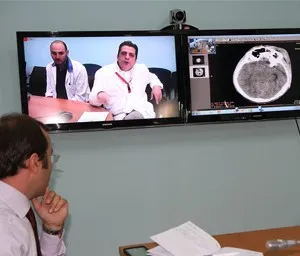
They have emerged as more favorable strategic organizational frameworks since they can function as one of the components of the futuristic actualized integrated systems where all people both from nook and cranny receive excellent medical care services.
2. Artificial Intelligence (AI): Enhancing Diagnosis and Treatment
From the diagnostics and the treatment segment it is realized that with the help of Artificial Intelligence, there are many diseases which can now be identified and treated. Technology, with the help of artificial intelligence, can sift through pleas of large amount of medical data and pick out data features which human are unable to see. For instance, it is easy to detect diseases, for example, cancer through an MRI scan or approximate the probabilities of the outcome by analyzing records in AI systems.
The patient-specific management approach is gradually becoming the norm due to the use of AI more therapies can be diagnosed based on genetic makeup or life events. It is a lot more efficient than the conventional ways of disease management as is the case with complicated diseases hence a better deal for the patients.
3. Wearable Technology: Promoting Preventive Healthcare
Smart wearable technologies such as fitness tracking devices and smartwatches are now parts of modern healthcare. They always monitor the clinical parameters such as pulse, sleep, as well as activity. It also allows patients to monitor their health status at any one time meaning patients can be in a position to make right decisions concerning their lifestyle.
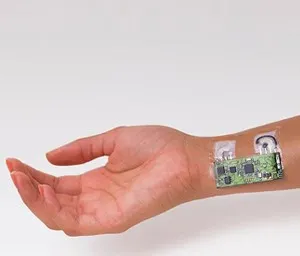
In the same way, these devices help the different care practitioners to telemonitor and diagnose possible warning symptoms of different ailments, to advise patients on preventative measures. For instance, use of devices such as continuous glucose monitors (CGMs) leads to good blood sugar control in diabetes and lowers on complications.
4. Robotics: Revolutionizing Surgery and Rehabilitation
Robotic technology has given a new dimension to surgical processes because they are more precise, patients enjoy less down time and complications are minimal. Robotic surgeries give the surgeon precision to accomplish complex operations with minimal invasive surgery. It is less invasive that means that patient after the intervention will have quicker recovery time. Rehabilitation is also an area of significant advance of robotics technology.
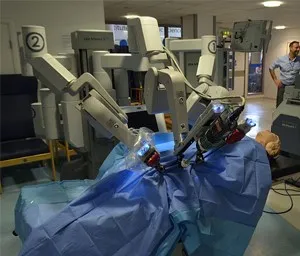
For example, rotorized suits help patients with mobility disability regain movement making their rehabilitation faster and more comfortable.
5. 3D Printing: Customizing Patient Solutions
3D printing is already shaping the future of health care in many ways, ranging from making unique prosthetics to cultivating tissue-specific implants. This technology allows for development of specific medical devices to meet the need of a single client. For example, the organs and tissues developed through 3D printing for research purposes for instance the organs and tissues could in future revolutionize the field of transplantation.
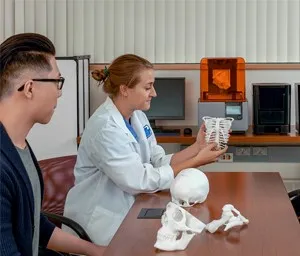
From personalized low expensive products and services the use of 3D printing is extending personalized healthcare that’s effective for the patients.
6. The Internet of Medical Things (IoMT): Streamlining Healthcare Delivery
The IoMT focuses on the incorporation of medical devices through a connection to the internet for time-idealistic tracking between patients and physicians. This connectivity helps improve the patient experience by providing continuous health updates without hospital visits as well as risk indication if any.
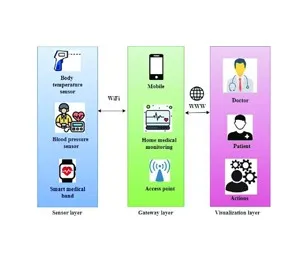
For instance, there are intelligent inhaled which are applied by asthmatic patients; and the application can monitor usage and avail information on the utilization of the inhaler at real-time thus enhancing the desired disease control. IoMT is improving the approach to delivering healthcare, relieving healthcare systems and enabling patients to initiate the process.
7. Blockchain: Securing Patient Data
Presently, information technology has gone advanced in the field of health care services making security an issue. Of course, there is an opportunity attached to this problem in the form of blockchain technology which paves a way for secure sharing of medical records.
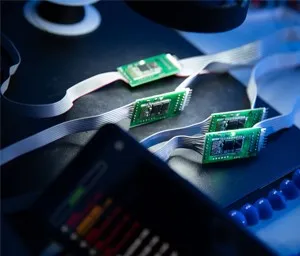
Blockchain guarantees that data belonging to the patient is secure and cannot be altered, whereby patients can decide who will be allowed to access the data. It can also also help in areas such as insurance claim which will also remove paper work in the health sector.
8. Virtual Reality (VR) and Augmented Reality (AR): Training and Treatment
In detail, 90% of the researcher restated the fact that the VR and AR technologies are helpful in medical learning and patient care. Business people employ the use of VR to rehearse different business meetings or presentations safely without the use of clients. This exercise also enhance skills as well as the self-assertiveness when tackling real life events. Patients use VR and AR in their rehabilitation, for pain control, and in applying mental health therapies.
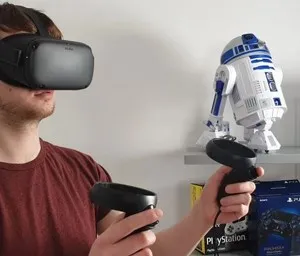
For example, in turning the patient’s focus from the pain during a particular process or incorporating it into the process through which the patient has to face anxiety and phobia disorders, VR can be employed.
Conclusion: The Future of Patient Care
Healthcare delivery is improving given that it is being offered through timely, proactive and convenient technologies. These advances range from AI-based diagnoses to wearable health care devices, and they are touching the lives of patients and strengthening the hands of the healthcare workers. In view of these advancements, future holds a better promising healthcare system and better patient care outcomes. Hence, subsequent implementation of such technologies means that we are on the precipice of a new age in medicine that improves the quality of service delivery to patients, as well as providers.

Sarah Richards, a member of the Editorial Team at European Hospital & Healthcare Management, uses her extensive background in healthcare communication to create clear and engaging content. With a strong commitment to making complex healthcare topics accessible, Sarah helps the team achieve its goal of delivering timely and impactful information to the global healthcare community.