
The Future of Imaging Technology: Key Innovations to Watch
Kate Williamson, Editorial Team, European Hospital & Healthcare Management
The development of imaging technology at a fast pace results from artificial intelligence together with quantum mechanics and hyperspectral analysis and neuromorphic engineering. The new innovations improve both medical diagnostic capabilities and autonomous navigation capabilities and security systems and other essential applications. The article evaluates future technological features in imaging solutions including AI-powered computational imaging and terahertz and ultra-fast imaging systems that will impact various industries.
Introduction:
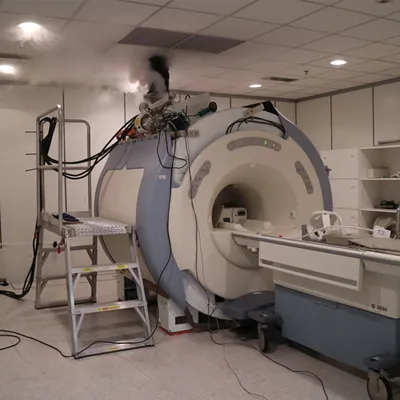
The advancement of imaging technology happens through four primary forces which include artificial intelligence (AI), computational imaging and sensor development and quantum mechanics. Image-based solutions at medical facilities and automobile systems and spacecraft expansion lead to unmatched operational precision and operational efficiency. This document evaluates the major technological improvements in imaging systems and their influence on multiple industrial sectors.
1. AI-Powered Computational Imaging
Artificial intelligence transforms imaging technology by boosting all aspects of image processing together with analysis and generation. AI algorithms allow users to perform computational imaging better than traditional optical systems could manage. The technology has shown exceptional impact on medical imaging and security surveillance and industrial automation fields.
Key Applications:
- Medical Diagnostics: AI-assisted clinical imaging tools for radiology and pathology enable better than human radiologist detection of medical abnormalities such as tumors and fractures.
- Security and Surveillance: Security technology becomes more effective with AI-based facial recognition along with object detection protocols that enable accelerated threat detection capabilities.
- Automotive Industry: AI-based imaging technology enhances the recognition of objects by autonomous vehicles to improve both their course navigation and safety performance.
The combination of Artificial Intelligence with imaging technology will deliver superior images which have no noise and fast image generation and improved clarity for complex structures.
2. Quantum Imaging: The Next Frontier

Imaging operated by quantum mechanics surpasses classical constraints to generate images with higher resolution as well as superior sensitivity. Quantum imaging achieves better performance than regular imaging approaches because it collaborates with entangled photons and quantum superposition to handle complex tasks mainly under low-light situations.
Key Innovations:
- Ghost Imaging: Light-sensitive correlated photon reconstruction produces minimally exposed imaging output which finds value in the medical field and military domain.
- Super-Resolution Microscopy: Beyond the diffraction limit this technique allows researchers to achieve higher resolution improvements for biological and nanotechnology fields.
- Quantum Lidar: Remote sensing equipment combined with autonomous navigation system benefits from this technology through its ability to precisely perceive distances along with identifying objects.
The medical diagnostic field along with space discoveries and defense operations undergo transformation through quantum imaging techniques which deliver unmatched image accuracy.
3. Hyperspectral and Multispectral Imaging
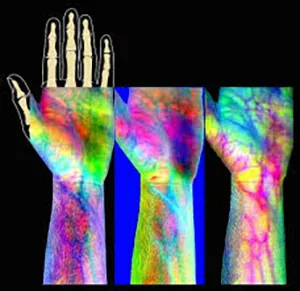
Through multispectral together with hyperspectral, imaging systems operators establish detailed knowledge of both substances and biological frameworks by collecting complete wavelength data beyond normal human perception.
Key Applications:
- Agriculture: Spectral signatures help check crops for health status to discover diseases along with improving irrigation efficiency.
- Medical Imaging: Tissue differentiation processes improve during early disease screening by dermatology, ophthalmology and oncology practitioners.
- Environmental Monitoring: The technology successfully recognizes contaminants in water while conducting water quality evaluations and detecting forest areas with complete precision.
High technology developments enable smaller and more usable sensor systems which lead to increasing industrial implementation of hyperspectral imaging.
4. Augmented Reality (AR) and Mixed Reality (MR) Imaging
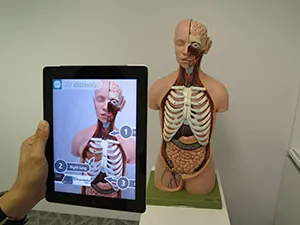
These modern technologies transform sectors into new domains by displaying digital content upon actual physical settings. Enhanced imaging capabilities featuring LiDAR and depth-sensing cameras deliver clear and intensive user interaction.
Key Innovations:
- Healthcare: Surgical procedures benefit from AR guidance since it enables immediate visualization of body tissues which results in better accuracy and successful results.
- Manufacturing: The use of AR in quality control systems enables workers to both find product defects and develop better designs.
- Retail and E-Commerce: By using AR imaging technology virtual try-on solutions create improved experiences for customers who shop in fashion and home decor sectors.
Through the combination of detailed imaging systems and AR/MR users can now access previously unavailable training education and entertaining opportunities.
5. Neuromorphic Imaging Sensors
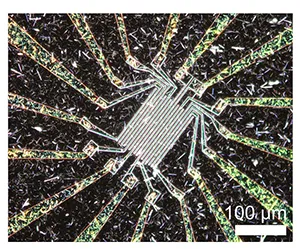
Research-based on human brain functions enables real-time processing of visual information through neuromorphic imaging sensors that consume low amounts of power. Neuromorphic sensors differ from regular cameras by monitoring changes instead of static framing which results in improved operational speed and effectiveness.
Key Advantages:
- Energy Efficiency: The technology enables low-power use which satisfies requirements for edge computing needs.
- High-Speed Detection: Suitable for fast-moving environments, such as robotics and autonomous vehicles.
- Low-Light Performance: Excels in night vision and astronomical imaging.
Research indicates that neuromorphic imaging technology will boost the capabilities of surveillance systems as well as biomedical examination instruments and AI robotics automation.
6. Terahertz Imaging: Breaking New Ground
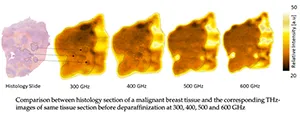
THz imaging systems work at frequencies between microwave and infrared light positions on the electromagnetic spectrum. The technology delivers special characteristics which allow it to see through non-conductive materials while detecting things hidden within.
Key Applications:
- Non-Destructive Testing: The system detects aerospace along with automotive component flaws without causing any damage to the components.
- Security Screening: Border security together with airport checking operations deploy this system to detect hidden weapons and explosives as well as contraband.
- Medical Imaging: Early skin cancer and dental caries detection takes place through a radiation-free process.
Modernized miniature designs of THz imaging systems enable their widespread application in security operations as well as healthcare facilities and industrial examination activities.
7. 3D and Volumetric Imaging
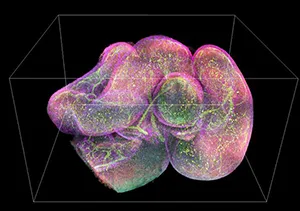
The development of 3D imaging systems extends past stereoscopic approaches by implementing complex volumetric imaging systems to obtain immediate high-definition depth information.
Key Innovations:
- Holographic Imaging: Medical professionals and entertainment consumers utilize this technology to generate precise full-color three-dimensional objects for their applications.
- 3D Bioprinting: Advanced biological structures required for regenerative medicine are made with information derived from imaging data.
- Smartphone 3D Scanning: The technology enables department’s customer devices to produce detailed 3D design content boosting multiple applications including interactive games and online shopping and social media usage.
8. Ultra-Fast Imaging: Capturing the Unseen
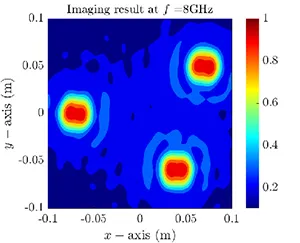
The field of telemedicine as well as robotics and digital content creation experience significant advancement through volumetric imaging.
Key Applications:
- Biomedical Research: Visualizes fast biological processes at their proper tempo including cardiovascular actions as well as neural activity.
- Ballistics and Defense: Obtains highly detailed measurements for projectiles in flight as well as shock wave propagation.
- Industrial Process Monitoring: These systems record fast-paced actions in manufacturing operations to achieve maximum production effectiveness.
Ultrarapid imaging development enables scientists to identify multiple groundbreaking discoveries across physical science and medical research and materials development fields.
Conclusion
A combination of AI with quantum mechanics and hyperspectral analysis and neuromorphic engineering powers the future development of imaging technology. Industry transformations emerge through these innovations which deliver better precision and efficiency and stronger capabilities to businesses. Progress in technology will enable imaging solutions to gain intelligence and accessibility for everyday usage while changing human interaction and perception of the world.

Kate, Editorial Team at European Hospital & Healthcare Management, leverages her extensive background in Healthcare communication to craft insightful and accessible content. With a passion for translating complex Healthcare concepts, Kate contributes to the team's mission of delivering up-to-date and impactful information to the global Healthcare community.