Workforce Analytics in Healthcare: From Data to Smarter Staffing
Dr. Devanand Kolothodi, Regional CEO, Aster DM Healthcare's Cluster and Co-Founder, Nextenti
Workforce analytics is transforming healthcare staffing by using data-driven insights to improve workforce planning, efficiency, and employee well-being. By leveraging predictive analytics, demand forecasting, skill mapping, and retention modeling, healthcare organisations can enhance patient outcomes, reduce burnout, optimise resources, and build a sustainable, equitable, and future-ready workforce.
Introduction:
Healthcare organisations are inundated with data, yet many continue to make staffing decisions based on intuition, outdated rosters, and last-minute headcounts. This disconnect between available information and actionable insights has serious consequences for patient outcomes, financial stability, and clinician well-being. Workforce analytics offers a solution, bringing precision, foresight, and equity to one of the most complex human resources challenges in any industry.
What is Workforce Analytics in Healthcare?
Workforce analytics involves the systematic collection, integration, and interpretation of people-related data to inform better management decisions. In healthcare, this means leveraging data from electronic health records (EHRs), HR information systems (HRIS), payroll, patient census, and even wearables to understand who is working, where, when, and how effectively.
Unlike basic reporting, workforce analytics utilises predictive modeling, trend analysis, and real-time dashboards. This empowers managers and executives to transition from reactive to proactive staffing across a wide range of areas, including nurse-to-patient ratios, absenteeism, overtime patterns, training gaps, and retention risks.
Why is it more crucial than ever?
The global healthcare industry faces a multifaceted challenge: increasing patient volumes, an aging workforce, high rates of clinician burnout, and tightening operating budgets. Health systems across Europe and Asia, for instance, are grappling with chronic nursing shortages, uneven skill distribution, and growing pressure from regulatory bodies to demonstrate adequate staffing.
In this environment, data-free decisions pose significant risks. Understaffing leads to more adverse events, lower patient satisfaction, and increased staff stress. Conversely, overstaffing wastes precious resources. Both scenarios can be avoided or mitigated with robust analytics.
Research consistently demonstrates that organisations employing advanced workforce analytics report 15–25% improvements in scheduling efficiency, reductions in unplanned overtime, and enhanced staff satisfaction. Retention also improves when employees perceive their workload as fair and manageable.
Key applications of Workforce Analytics
1. Predictive Staffing and Demand Forecasting
One of the most valuable applications is forecasting patient demand and corresponding staffing needs. By analysing historical admission patterns, seasonal trends, and procedure volumes, predictive models can anticipate the required number of nurses, physicians, or allied health professionals for each shift and unit. This enables proactive scheduling, moving beyond crisis management.
2. Skill Gap and Competency Mapping
Analytics platforms can map the competencies and certifications of every staff member against clinical requirements. This is especially vital in specialised units like ICUs, operating theaters, or oncology wards, where specific skills are essential for patient safety. Gaps can be identified and addressed before they lead to critical incidents.
3. Absenteeism and Burnout Early Warning
Patterns of sick leave, missed shifts, and declining productivity often serve as early indicators of burnout or disengagement. Workforce analytics can flag these signals before they escalate, allowing managers to intervene, redistribute workload, or offer support, thereby preventing the loss of valuable team members.
4. Retention and Attrition Modeling
Replacing a nurse or specialist can cost substantial money when factoring in recruitment, onboarding, and training. Attrition analytics helps HR teams identify employees at risk of leaving and understand the underlying reasons, facilitating targeted retention strategies.
Key Insight: Organisations with mature workforce analytics capabilities are three times more likely to report improvements in both clinical outcomes and staff satisfaction compared to those relying on traditional scheduling methods.
Challenges in Implementing Workforce Analytics
Despite its potential, implementing workforce analytics presents several obstacles. A primary challenge is data quality. Analytics is only as effective as the data it receives; if HR systems, scheduling platforms, and electronic health records (EHRs) operate in silos, the insights will be limited. Achieving integration requires significant investment in both technology and change management.
Privacy and consent are equally critical. Healthcare workers possess rights concerning the usage of their personal and professional data. Therefore, analytics programs must be designed with transparency and fairness as foundational principles.
Cultural resistance can also impede adoption. Clinical leaders, accustomed to hands-on management, may be skeptical of staffing recommendations generated by algorithms. Successful implementation requires involving clinicians and frontline managers in the design process, rather than imposing analytics solutions from the top down.
Cultivating a data-driven Workforce Culture
Adopting workforce analytics is more than a technology project; it's an organisational transformation. Leaders must champion data literacy, invest in training, and foster psychological safety, enabling staff to voice concerns illuminated by data.
Robust governance structures are essential to ensure that analytical insights translate into fair and equitable decisions. Furthermore, diversity, equity, and inclusion (DEI) considerations must be embedded within analytics frameworks to prevent algorithmic bias from negatively impacting specific groups.
The road ahead for Workforce Analytics
Workforce analytics in healthcare is rapidly advancing. Future developments include AI-driven natural language interfaces that allow managers to query staffing data conversationally, integration with patient outcome metrics for closed-loop feedback, and the application of machine learning to continuously improve prediction accuracy.
As healthcare systems across the globe navigate increasing complexity, organisations that invest in workforce analytics today will be better equipped to address future challenges, leading to safer wards, more engaged staff, and greater financial sustainability.
Workforce analytics aims not to replace clinical judgment, but to provide every leader with the clearest possible understanding of reality, enabling judgment to be applied where it is most impactful.
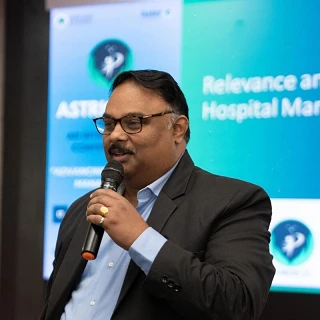
Dr. Devanand Kolothodi is the Co-Founder of Nextenti, India’s fastest-growing AI-powered healthcare workforce platform, which is redefining talent management across the healthcare sector. With over two decades of senior leadership experience, including serving as Regional CEO of Aster DM Healthcare’s Telangana and Andhra Pradesh cluster, he brings deep operational expertise to workforce innovation. He is the Chairperson of the HR Forum at CAHO, an Adjunct Faculty member at the Administrative Staff College of India (ASCI), and a member of the National Healthcare Committee of the Indian Chamber of Commerce. He is based in Hyderabad, India.