

Public health substantially relies on laboratory medicine to achieve disease detection alongside the decision-making process and surveillance activities and checking treatments. The quality of laboratory services operating in low-resource settings (LRS) remains inadequate because of both structural and financial and staffing issues. Although the conditions present barriers there are distinctive possibilities for innovation that enable collaboration which leads to scalable solutions that can affect global health outcomes.
The critical problems encountered within laboratory medicine areas of low-resource regions together with upcoming diagnostic and healthcare transformative opportunities receive focused analysis in this article.
Understanding Low-Resource Settings
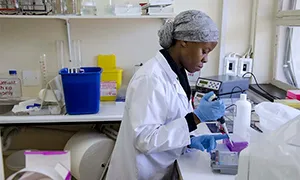
Required resources for low-income communities entail limited economic capabilities and insufficient personnel skills together with unavailable testing resources and inadequate quality control systems. The locations where laboratory services fall short can be found both in developing nations and in unattended rural and outer-urban regions of developed countries.
The laboratories operating within restricted facilities have difficulty sustaining global health priorities mainly because of the following issues:
• Insufficient funding
• Outdated equipment
• Inconsistent electricity and water supply
• Supply chain issues
• Workforce shortages
The rising dual threats from communicable diseases along with non-communicable diseases require enhanced laboratory services to operate effectively throughout every resource-limited environment.
Key Challenges in Laboratory Medicine in Low-Resource Settings

1. Infrastructure and Equipment Limitations
Most laboratories in LRS face significant challenges with basic infrastructure:
• Frequent power outages and lack of stable electricity affect equipment performance.
• Inadequate water supply hampers sterilization and cleaning processes.
• Laboratories often lack modern diagnostic tools such as PCR machines or automated analyzers, which are standard in high-income countries.
Equipment maintenance alongside calibration becomes a deferred procedure because of scarce technical skills and unattainable spare parts.
2. Skilled Workforce Shortages
Labs face their most critical problem today due to the lack of qualified laboratory personnel. Modern diagnostic methods along with quality control procedures receive insufficient training by many technicians. The staff working in rural or remote laboratories typically includes personnel who hold limited training in laboratory practice and have basic laboratory knowledge.
Congruently the migration of skillful workers toward urban areas and foreign countries intensifies the existing problem.
3. Supply Chain and Logistics Issues
The process to procure reagents and test kits together with consumables undergoes delays in various low-resource areas. Long customs clearance times, erratic delivery schedules, and poor inventory management lead to frequent stock-outs. Delaying important medical diagnoses and the loss of laboratory service credibility thus results from these circumstances.
4. Lack of Quality Assurance and Accreditation
The practice of quality control in LRS laboratories generally lacks established systems. The majority of laboratories avoids participating in external quality assessment programs (EQA) while their internal quality control (IQC) procedures show inconsistent patterns. The unreliability of test outcomes generates incorrect medical assessments which subsequently triggers improper health interventions causing negative medical results for patients.
Labs find it difficult to join global health surveillance networks or research initiatives because they fail to achieve the goals set by accreditation standards such as ISO 15189.
5. Data Management and Interoperability Gaps
Medical records saved on paper persist as everyday practice across many facilities thus inhibiting both patient history monitoring and extensive surveillance activities. Resistance between medical laboratories and clinicians is created by insufficient information technology infrastructure and the absence of electronic health record (EHR) integration.
Labs in LRS fail to deliver appropriate regional or national disease control support without reliable data management systems.
6. Disease Burden and Epidemiological Complexity
The healthcare facilities in LRS experience simultaneous outbreaks of communicable diseases HIV, tuberculosis, malaria together with increasing diagnoses of non-communicable diseases diabetes and cancer. The complex epidemiological variety calls for laboratories to update their diagnostic capabilities while using affordable ways to manage these tools.
Opportunities for Innovation and Growth
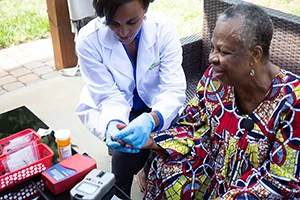
The regional laboratories face multiple challenges however several innovative approaches and strategic methods are revolutionizing their laboratory medicine services.
1. Point-of-Care Testing (POCT)
Diagnostic devices which provide Point-of-Care testing in Low-and-Middle-Income Regions are becoming more popular due to their portable design along with their straightforward operation and their short testing times. Point-of-care testing equipment enables examinations of HIV and malaria and hepatitis and COVID-19 and selected NCDs to occur outside standard laboratory settings.
Benefits of POCT in LRS include:
• Decentralization of services
• Reduced turnaround time
• Improved disease surveillance
• Enhanced linkage to care
Devices accomplish their maximum impact when training protocols and calibration processes and reporting systems are in place.
2. Mobile and Modular Laboratories
Mobile laboratories both in vehicle format and modular unit format are being used for diagnostic outreach to distant communities. The facilities include important equipment necessary to perform serology tests along with microbiology science and molecular diagnostic examinations and hematological procedures.
Successful outbreak diagnostic support models were developed by MSF (Médecins Sans Frontières) and FIND through their operations in sub-Saharan Africa and Southeast Asia.
3. Public-Private Partnerships (PPPs)
The improvement of laboratory capacity demands essential collaboration between governmental entities and both non-profit organizations and industry representatives. PPPs can facilitate:
• Infrastructure development
• Workforce training
• Access to affordable diagnostic kits
• Technology transfer and capacity building
PEPFAR operates across Africa under the PEPFAR program while the Fleming Fund provides funding to support AMR surveillance collaborations.
4. Digital Health and Connectivity Solutions
Real-time clinical data reporting services along with medicine stock and patient care statistics become possible through mobile applications and cloud-based computing solutions. Digital health tools help in:
• Linking remote labs with central hubs
• Conducting remote training and mentorship
• Monitoring disease trends and alerting outbreaks
Rural healthcare areas have started to transform medical care because of mHealth technology alongside AI tools for diagnostic enhancement.
5. Task-Shifting and Training Programs
Most nations have started implementing task-shifting models because they understand their lack of qualified medical staff. Community health workers receive proper training to conduct simple tests under the guidance of laboratory assistants.
Virtual learning platforms together with blended educational methods develop regional healthcare competence through continuous training programs that do not interfere with current service operations.
6. Affordable and Locally Sourced Solutions
Research focuses on developing economical diagnostic instruments that specifically serve Low and Relatively Served areas. Examples include:
• LAMP (loop-mediated isothermal amplification) as an alternative to PCR
• Microfluidics-based paper diagnostics
• Solar-powered centrifuges and refrigerators
• Locally manufactured rapid test kits
The innovation hubs together with academic-industry collaborations established in India Nigeria and Kenya create opportunities for developing regional solutions locally.
Case Studies Highlighting Success
Rwanda’s National Reference Laboratory (NRL)
Rwanda dedicated significant resources to build new laboratory facilities after the genocide period took place. The NRL functions today as a strong base for research-based quality control which supports both local capability strengthening tasks and academic activities. The organization obtained ISO accreditation from government support and provides testing services to more than 400 facilities throughout the country.
India’s Use of POCT for Tuberculosis
The Indian Revised National TB Control Programme implemented GeneXpert POCT technology for tuberculosis diagnosis. The technology faces challenges with costs and maintenance but it cut dramatically down the time needed for TB identification and drug-resistant TB identification.
Zambia’s Lab Management Information System (LMIS)
Zambia used donor-supported initiatives to establish a single LMIS system that improved stock management as data flowed between its many labs. The system decreased the frequency of HIV and malaria diagnostic kits going out of stock while providing better support for program decision-making.
Strategies for Strengthening Laboratory Medicine in LRS
A sustainable improvement of laboratory services in low resource settings requires implementing these three fundamental strategies:
1. National Laboratory Policy Development: Nations must develop thorough policies which regulate their laboratory services together with their quality control approaches and training programs and partnership structures.
2. Investment in Human Capital: The establishment of scholarship programs along with local trainee institutions and career tracks for laboratory staff needs immediate national prioritization.
3. Emphasis on Quality Management: Quality accreditation such as SLIPTA (Stepwise Laboratory Quality Improvement Process towards Accreditation) and external quality assessment programs must be adopted to deliver quality improvements.
4. Integration into Primary Healthcare: The primary health system needs laboratories to fully integrate into its framework as opposed to functioning as separate departments while maintaining robust patient referral programs.
5. Resilient Supply Chains: A combination of investments in logistics systems as well as forecasting technology and vendor relationship management will secure uninterrupted diagnostic service continuity..
6. Sustainable Financing Models: The government needs to combine its funding with alternative financing mechanisms including diagnostic subsidies and outcome-based investments and donor pools.
Conclusion
While low-resource settings pose undeniable challenges for laboratory medicine, they also present immense opportunities for innovation and impact. By combining local knowledge with global support, leveraging technology, and building robust partnerships, these regions can transform their diagnostic landscapes.
Laboratory medicine, when strengthened in low-resource settings, does more than just improve healthcare delivery - it becomes a catalyst for achieving universal health coverage, controlling disease outbreaks, and saving millions of lives.