1. How was your overall experience participating in the ESC Congress 2025?
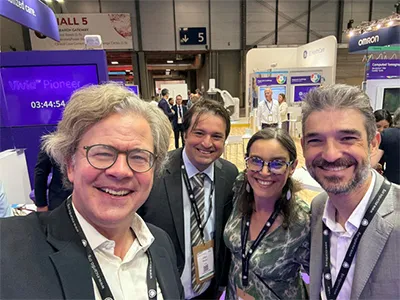
My experience at ESC 2025 in Madrid was deeply energizing and thought-provoking. From the opening sessions through the late-breaking science panels and guideline updates, the congress felt precisely like the pulse of modern cardiology. The breadth of participation from clinicians, researchers, industry leaders, and health systems created a vibrant environment for exchanging ideas. For me, it was refreshing to see both scientific rigor and human stories intersect: technologies not only for innovation’s sake, but to address real clinical problems and global health disparities.
2. What motivated you to contribute to this year’s congress, and how did your role align with the event’s central themes?
At GE HealthCare, we have a comprehensive cardiology portfolio from diagnostics to advanced visualization, imaging, AI, and workflow solutions. My motivation was to engage in conversations that push boundaries: how can imaging and visualization help close practice gaps, improve diagnostic speed and accuracy, and ultimately support better patient outcomes? ESC 2025 had several themes I deeply care about: digital transformation, global health, performance & efficiency, and clinically meaningful innovation. My role as Chief Medical Officer for Imaging & Advanced Visualization Solutions is to guide our development so it aligns with those themes, and ESC provided the stage to compare, contrast, learn, and share.
3. What were the most significant discussion points you observed during the congress?
Several key discussion threads stood out:
• Health equity and global burden of cardiovascular disease: how care access, diagnostic capacity, and follow-up care vary dramatically among regions, and what scalable, cost-effective technologies might help close those gaps.
• Ethical, regulatory, and practical aspects of AI in cardiology: biases, transparency, explainability, data privacy; ensuring that AI tools are validated, integrated properly, and benefit rather than undermine patient care.
• Guideline updates and implementation: new recommendations for valvular heart disease, myocarditis, pericardial disease, lipid and blood pressure management; plus “Guidelines in Practice” sessions addressing how to make these real in daily care.
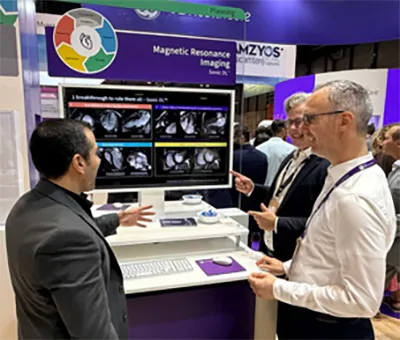
• Imaging efficiency and workflow innovations: reducing manual burden, improving image acquisition, cutting scan time, optimizing radiation dose. These practical improvements can make a real difference in both high-volume centers and lower-resource settings.
4. Which sessions or panels stood out to you as particularly relevant or impactful for cardiology professionals?
• The Late-Breaking Science sessions were remarkable: they showcased studies with immediate relevance to clinical care, especially trials in hypertensive therapy and coronary artery disease risk stratification.
• The Guidelines in Practice panels, which dove into case studies to show how new recommendations can be applied in real institutions, were especially valuable. They bridge the often-large gap between what is “recommended” and what is feasible in varied care settings.
• Sessions on AI and imaging innovation, particularly those showing how advanced visualization and automation can shift workflow burdens and improve diagnostic precision, were highly relevant.
• The Global Health sessions highlighting disparities, low- and middle-income settings, and scalable innovations truly underscored the global responsibility cardiology carries now and soon.
5. What were your key takeaways from the event, both as a participant and as a medical leader?
• Innovation must always be coupled with validation, equity, and integration. It is not enough to produce cutting-edge devices or AI tools; these must be accessible, validated in diverse populations, and embedded into existing clinical workflows.
• Workflow efficiency matters as much as diagnostic capability. Technologies that reduce time, reduce operator burden, and improve consistency can have as big an impact as new pharmaceuticals or interventional techniques.
• Imaging and visualization are central in modern cardiology. They are foundational to diagnosis, treatment planning, risk stratification, follow-up. Advances in imaging resolution, AI-assist, and interactive visualization will continue to unlock better patient care.
• Collaboration is essential. Clinicians, industry, payers, health systems, regulators when aligned, they can accelerate adoption without compromising safety or ethics.
• Global health is no longer a niche. It must be part of every institution’s strategy: ensuring that cardiology innovation benefits people in diverse settings, not only those in resource-rich systems.
6. How do you see the discussions at ESC Congress 2025 shaping the future of cardiology and patient care?
ESC 2025 has set a clear trajectory: patient care will become more personalized, anticipatory, and digitally enabled. We are moving toward a future where diagnostics are earlier and less invasive, AI supports decision-making in real time, and care pathways are optimized end to end. The conversations around guidelines + implementation will drive standardizing excellence across geographies. Also, the demands for equity and global health will push for technologies designed not only for high-resource hospitals, but for use in varied contexts. Regulatory, reimbursement, and ethical frameworks will adapt, hopefully bringing structure to fast moving innovation. Patient care will increasingly depend on integrated imaging, advanced visualization, and tools that help clinicians manage complexity with clarity.
7. What were the most exciting innovations or technological advancements showcased at the congress?
• Imaging systems with AI-powered automation: improved measurement tools (ejection fraction, strain imaging) that reduce operator variability and speed up reporting.
• One-beat CT angiography technologies: faster acquisition, motion correction, reduced radiation exposure: progress that directly benefits patients.
• Advanced visualization tools: better post-processing, 3D/4D imaging, clearer rendering of anatomy, integration with treatment planning and navigation.
• Workflow/automation platforms for echo and overall imaging reporting: tools that reduce manual steps and free up clinician time.
• Digital health tools and predictive analytics: risk stratification platforms, remote monitoring integrated with imaging data, and AI models that help anticipate disease progression or complications.
8. How do you see imaging and advanced visualization playing a role in advancing cardiology in the near future?
Imaging and advanced visualization will increasingly be the backbone of cardiology in several ways:
• Early detection and risk stratification: better imaging lets us pick up disease earlier, e.g. subtle structural changes, fibrosis, plaque characteristics, calcium scoring. Advanced visualization and AI will help interpret these images with greater sensitivity and consistency.
• Guided therapy planning: 3D/4D visualization aids decision making in structural heart disease (valves, pericardial interventions), planning surgeries or catheter-based interventions.
• Reducing variability and human error: automation in standard measurements, reproducible protocols, AI-based decision support will reduce inter-observer differences and speed diagnosis.
• Improved patient workflow and throughput: faster imaging, more precise acquisition, reduced scan times and dose means better patient experience, higher capacity, and more cost-effective services.
• Integrative data visualization: combining imaging with genomic, clinical, and remote monitoring data to give clinicians holistic views of patient risk and disease state.
9. How did ESC 2025 facilitate meaningful professional connections or opportunities for collaboration?
ESC 2025 was fertile ground for forging new connections and strengthening existing ones. As a representative of GE HealthCare, I had the opportunity to engage directly with:
• Clinicians and researchers working on AI and imaging to understand their unmet needs, gain insight into local practice challenges, and collaborate on solutions.
• Health systems and hospital leaders from different countries exploring how to scale and deploy advanced imaging in varied environments, from high-volume centers to more constrained settings.
• Policy makers and guideline authors, especially in sessions on global health and guidelines implementation, which opens dialogue on how innovations can conform to standards and be supported by regulatory frameworks.
• Partnering with academics and innovators in visualization, data science, AI to explore integrative research, validation studies, and multicenter trials.
These interactions are essential. They provide feedback loops on what works, what’s acceptable, what evidence is needed and help shape the product roadmap and deployment strategies for real-world impact.
10. What message would you like to share with fellow professionals who could not attend the event?
Even if you couldn’t make it to Madrid, the messages from ESC 2025 are clear and broadly relevant:
• Stay abreast of guideline updates especially those that address structural heart disease, myocarditis/pericarditis, lipids, and hypertension. They will increasingly inform what is “standard of care.”
• Look for imaging and AI tools but scrutinize them: ask about validation in diverse populations, workflow fit, interpretability, and evidence of outcome improvements.
• Consider not just what technology can do, but what it should do: in terms of patient safety, clinician support, equity, cost.
• Seek collaboration: reach out to peers, industry, academic centers. The best advancements often come from partnership.
• Advocate for your patients: innovation must be guided by clinical value. New imaging or AI tools should ultimately reduce morbidity, mortality, or improve quality of life, not simply create new capabilities in isolation.
Thank you for the opportunity to share these reflections. ESC Congress 2025 has reminded me that the future of cardiology is not just being built, it is being shared.