
One of the most constant dangers to the patient’s safety and the economic well-being of healthcare systems is constituted by medical errors. Such errors, which are commonly preventable, both result in ill-health, and cause enormous economic loss. Everything from prolonged stays in hospitals to hefty malpractice lawsuits sends ripples affecting an institution’s resources, tarnishing reputations, and imposing further costs to patients. Given that in our times healthcare efficiency and value-based care are of the essence, knowledge of economic implications of medical errors, and how to minimize them, is of the essence.
Understanding Medical Errors and Their Scope

Medical errors entail medical mistakes during delivery of the healthcare process that have or can cause harm to the patient. These incidences can occur at any stage of care, and at different settings such as hospitals, clinics, pharmacy and nursing homes. There are various types of errors among which: diagnostic errors; medication mistakes; surgical complications; infection-related complication; and communication failures between healthcare providers. There are also human failures, and efficiencies in the system which lead to these failures. No matter where they come from, the consequence is generally the same: patients suffer, trust is eroded and costs soar.
The Direct Financial Impact of Medical Errors

Direct cost related to extra care is the most direct and visual economic impact of medical errors. As an example, a patient who gets a post-operative infection because of poor sterilization may need prolonged hospitalization, costly antibiotics and maybe another surgery. Hospitals therefore need to allocate beds, staff time and resources to correct the problem while diverting away from other. There may be unnecessary tests or treatments which are added to the problem in terms of money. Such costs are in most instances not reimbursed by insurers, and therefore purchasers bear the brunt.
Litigation is also one of the biggest direct expenses. When patients or patients’ families seek lawsuits based on negligence or injury, hospitals can face settlements or damage awards into millions. Malpractice insurance premium is also on the rise due to frequent complaints leading to more pressure on health care budget.
The Indirect Economic Burden

Chronic medical errors produce a number of indirect economic costs that are too rarely identified in their full magnitude. Long-term disability to patients resulting from medical mistakes may not put patients back into productive work, thus losing productivity. Families of affected patients will typically suffer emotional and financial difficulties as they become carers or cut back on hours spent in work. Besides this, the hospitals notorious for high rates of error risk losing patients, referrals, and funding and in competitive market world.
At a macroeconomic level, nations which have a lot of medical errors observe depressed economic efficiency. Health systems become less resilient and more reactive with investments in damage happening rather than anything to support innovation or prevention. This inefficiency retards the overall process of universal health coverage and sustainable funding of health care.
Global Estimates of Economic Losses

Estimation of the total cost caused by medical errors is difficult, but available studies give a clue on the problem’s scale. In the United States, medical errors are estimated to cost the healthcare system around $US 17 billion and US$ 29 billion each year. When accounting for litigation, lost productivity and long term disability, the number may egregiously exceed US$100 billion. Britain’s National Health Service (NHS) states that there are almost £2.5 billion spent annually in claims caused by clinical negligence. In developing countries where formal data are scarce, anecdotal and regional studies suggest that there are significant losses, especially amongst over-strained urban hospitals which are burdened with too many patients and under skilled workers.
Root Causes behind Medical Errors
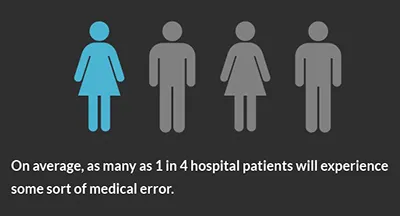
Root causes of medical errors needs to be ascertained before effective interventions are developed. Human factors that include fatigue, stress and lack of continuous training, are of top importance, particularly in high speed environments such as the emergency room and ICU’s. Miscommunication in handoff/shift changes can result to the missing or wrong information passed along. Lack of integration between departments, old software, are technological limitations leading to data silos and wrong decision making.
Further, systemic problem such as insufficient staffing or lack of safety protocols or the hospital culture that discourages error reporting makes the problem worse. In many instances frontline staff know there are safety gaps but are unable or unwilling to raise them because they do not want to be reprimanded or for the institution to be apathetic.
Technology-Based Solutions for Error Reduction
Some of the best means of reducing medical errors are technological advancements. The EHRs make documentation better and offer clinicians direct access to histories of patients. When used together with Computerized Physician Order Entry (CPOE) systems, EHRs can automatically check for drug interactions, allergies or drug dosing errors that commonly occur in prescriptions making them preventable.
Clinical Decision Support Systems (CDSS) utilizing the power of artificial intelligence can process huge amounts of data in order to alert the clinicians to potential risks or suggest diagnostic strategy. Also barcoding and radio-frequency identification (RFID) systems are being used to track medications, surgical instruments, even blood samples to ensure the right procedures are the ones being followed.
Training and Professional Development

It is so important to have continuous education and development of skills that reduce human errors. The use of simulation-based training enables healthcare professionals to perform emergency response and procedural procedures in a risk-free environment. Not only does this hone their technical prowess, addition to teamwork and communication will prove important in high pressure situation.
Staff’s competencies and up to date knowledge in medical practice are sustained by credentialing and periodic assessments. Much of the investee in training programs; hospitals get to experience fewer adverse events and better clinical outcomes.
Building a Culture of Safety
May be one of the most mind blowing things for an institution of healthcare to do is to develop a culture of safety. The stuff in place ensures that an environment exists for workers to report errors or near misses without fear of being punished. Conversations related to mistakes and learning opportunities are inherently open and therefore noble.
The leadership has a significant role when establishing the tone. Once the executives make sure that their policies, communications and resource allocation reflect their care for patient safety, it makes it easy to write off error reduction as a non-negotiable mandate, already built into the institutions’ values.
Standardizing Protocols and Checklists

Procedure protocols and checklist ensure a structured view of routine procedures thus reducing variations and human oversight. For example, the World Health Organizations Surgical Safety Checklist has been credited with a reduction in post operatory complications by over 35 %. When these common handoff procedures, medication reconciliation, and elements of infection control are standardized, ambiguity is eliminated, and critical steps are never skipped.
In addition, these protocols can be used in local settings and incorporated into digital instruments (so that monitoring and compliance checking would occur in real time).
Prioritizing Staff Well-Being

If healthcare professionals worked in less stressful settings, burnout wouldn’t be one of the main causes of mistakes. Prisons are required to realize the relationship between staff well-being and patient safety. Not only does the provision of doable work hours, mental health care and wellness programs increase the morale of employees, it increases alert level and decision making capabilities as well.
When staff are not only valued but also supported they are more engaged in work; their attention to detail is also more available, and both are critical in reducing the errors.
Leveraging Data and Analytics

The application of predictive analytics and a risk management based on data analysis is becoming a generalization within the healthcare aspect. Using patient data, hospitals can recognize high risk individuals or circumstances, and where errors occur more frequently. This allows for proactive intervention. Analysis of previous errors to determine root causes may find system weaknesses that may guide policy change.
In addition, sharing data among institutions may create body of knowledge that will help the whole industry to learn from previous mistakes and successes.
Economic Gains from Preventing Errors
Medical mistakes can be reduced to the advantage of the economy. Less readmissions mean cost savings to hospitals and insurers. Patients are treated more efficiently, thus lightening public health systems’ burden. Those hospitals that are safety conscious also have better reputations which gets them more patients as well as more staff.
A Harvard study showed that hospitals that spent in patient safety programs enjoyed annual savings amounting to over US$1. 5million, as a result of reduced claims and increased operational efficiency. In the long term, these initiatives may result in a virtuous cycle in which good quality care creates economic sustainability.
Policy and Regulatory Interventions

Regulatory bodies and governments should take a leading action in minimizing medical errors. Accreditations like those by Joint commission International (JCI) or National Accreditation Board for Hospital (NABH) in India provide hospitals the clarity of safety standards they ought to set.
Payment models are also evolving. Beyond payer-provider market dominance, value-based care initiatives that tie reimbursements to quality out comes only, not volume, encourages hospitals to minimize mistakes. Adverse events must be reported; as in the U.S and in some parts of Europe, this increases transparency and accountability.
Barriers to Implementation
Even though the advantages of error reduction are clear, hospitals have trouble with implementation. High upfront investment costs for new technologies/training programmes may discourage action especially in resource deficient environment. Resistance from the staff and lack of will of the political class, and fragmented care systems, also present as issues. Also, poor nations with small data infrastructure find it hard to track its progress or distinguish problem areas.
It is through partnership between the stakeholders that is, the policymakers, technology providers, training institutions and health workers that these barriers are overcome.
Conclusion
Medical errors cannot be viewed as isolated events – they can be system problems with broad impact for the economy. Direct cost of treatment, litigation and extended care are aggravated by indirect loss of productivity, trust and institutional efficiency.
Nevertheless, such errors are mostly avoidable. With the embrace of technology, the interest to training, standardization of protocols, as well, as a safety culture, healthcare systems can reduce their incidence considerably.
The financial benefits stemming from efforts to eliminate errors are sizeable but far greater impact is made possible in the preservation of lives and restoration of confidences in healthcare. A cutting-edge and financially sound future requires that reducing medical slip-ups become the primary concern for leaders and legislators in the healthcare industry.