
The Rise of Remote Monitoring Is Reshaping Healthcare
Richie McGregor, Head of Digital and Performance, Cumbria Health
This article explores how these innovations are revolutionising patient care, from early telemedicine to AI-driven wearable’s and IoT integration. With the ability to reduce hospital visits, improve outcomes, promote self-care and data-driven insights, remote monitoring is not just evolving—it is redefining the future of healthcare delivery
With a career spanning almost 20 years working in healthcare in the UK across a variety of departments within the tech space, I have been fortunate enough to witness and participate in the evolution of how we use technology in healthcare.
I was present for the initial modernisation of patient administration systems and the implementation of the NHS spine, which connected all health providers across the country, and I am here now, whilst instead of connecting health providers, we are now connecting patients to the same systems via the NHS App – our Digital front door.
Whilst some would argue (unfairly in my opinion) that 20 years to get to this stage is no great feat considering the pace at which the Banking industry achieved this, the complexity of what has been achieved should not be understated.
When we think of what we use online banking for and the available information is comparatively basic – money in, money out, balance and transaction history are the standard expectations and whilst some make other features accessible – mortgage and loan applications, overdraft management facilities, chat to an adviser features etc. a standard NHS health record will contain demographic information, allergies, medications, appointment records, health record notes, health status, blood tests, imaging and diagnosis whilst online consultations are now available across most GP practices via the NH
Further to this complexity, making up the complex structure of NHS providers are 6,277 GP practices and 215 hospital trusts feeding into the NHS App directly via either their primary care EPR (electronic patient record), NHS-developed systems or a range of third-party providers. The journey to get to this stage has been challenging, but there is so much more to come, and it is exciting, particularly given the challenges to come.
I use the word exciting because as well as being a health-tech enthusiast and employee, I am also about to need the NHS more frequently – I have recently had my 40th birthday and will soon be invited for my NHS Health Check (Health MOT – more on that later in the article) and statistically, I know that over the next 2 decades, I will use the NHS more than I have done in the first 4 decades of my life. I have become increasingly health-conscious, and advances in technology mean that I can now monitor my blood pressure, blood oxygen levels, stress levels, sleep performance, heart rate variability and activity levels using consumer wellness products such as smart-watches and health bands. I can do this continuously or as a spot measurement, and whilst the products I use are not registered medical devices, they allow me to self-monitor my own health, wellbeing and fitness.
Remote patient monitoring is not a new concept and has been around since before the first NHS PAS system in the late 60’s (IRC PAS). Alan Shepherd (the second man in space) was monitored on a space flight in 1961. Following this, we had the ECG Holter in 1962; however, remote patient monitoring as we know it today did not become a standard offer until far later. A large majority of clinicians would probably refer to the COVID-19 pandemic as the first time they truly benefited from what the technology can offer.
I am often asked why it took from 1961 until 2020 for clinicians to be able to receive readings from patients when the technology has been there all this time, and unlike climbing Mount Everest, the conditions haven’t needed to be perfect, which brings me to Everett Rogers Diffusion of Innovations (Everett Rogers, 1962 - Diffusion of Innovations). Everett theorised that widespread adoption typically moves through five groups: innovators, early adopters, early majority, late majority, and laggards.
When I describe the remote patient monitoring journey, I use these stages. The first group of innovators was the Whole System Demonstrator programme, which involved 6,191 patients who were registered with 238 GP Practices across Newham, Kent and Cornwall. Whole system demonstrator programme: Headline findings – December 2011 - GOV.UK and concluded with demonstrable benefits which reduced mortality, hospital admissions, reductions in length of stay for those who did need to be admitted and reduced time in ED.
My early adopter example is in 2016 when a solution named Florence reported 22,000 patients across 70 health providers utilising their SMS solution to send reminders for medication, monitor self-reported readings (blood pressure, symptoms), with clinicians receiving alerts if a patient's condition was to deteriorate. Evaluations showed high patient satisfaction, feasibility across a range of conditions, and usability, including those typically referred to as non-tech-savvy.
Our early majority came in 2020 through the introduction of Oximetry@Home services and Covid virtual wards, NHS England » COVID virtual wards, the catalyst of which was the Covid pandemic. This is the first example in the NHS of a remote monitoring service being scaled nationally, and over 26,000 patients benefited from the service in less than a year. PowerPoint Presentation with 120 from the 125 Acute Trusts reporting having a COVID-19 virtual ward.
Our late majority will come soon afterwards, with the NHS investing £200 million in the implementation of virtual wards and a further £250 million (match-funded in 23/24). In 24/25, 111,000 patients were admitted to a virtual ward.
Which now brings us to the laggards, which remain.
Across England, 19 trusts do not have a modern EPR, eight of which are Acute Hospital providers.
Therefore, it limits their ability to embrace the benefits of remote patient monitoring. Despite the benefits shown by remote patient monitoring across thousands of published and peer-reviewed clinical papers, there are still clinicians who prefer the traditional face-to-face models, are not convinced by the accuracy of medical devices despite robust medical certification processes, and many have a mistrust of the intentions of implementing digital technologies at the fear of being replaced.
Technology trust and the fear of a new revolution are not new concepts, and the AI revolution is often likened to the Industrial Revolution of the 1800s.
Public perception of the Industrial Revolution was one of excitement, a feeling of incredible progress for humankind, with hope of new opportunities, faster travel, more cost-efficient household budgets, and a greater quality of living. Those working in industry, however, saw this as a threat to their jobs, livelihoods and complained of their working conditions (long hours, low pay and unsafe working environments) whilst their communities had concerns about the breakdown of their traditional way of life and protecting rural economies.
Whilst the parallels are striking, the circumstances and challenges of today differ significantly, so the comparison can only be taken so far.
Arguably, today our challenges are greater. From a public service perspective, our population has increased 325% (the 1810 population was approximately 16m) whilst life expectancy has doubled.
The NHS is a UK national treasure; however, it is not sustainable in its current form. The Health Foundation estimates a need for a further £38 billion per year by 2030 to meet impending demand, largely due to our growing population and ageing demographic - to put this into context, Iceland’s GDP is £30 billion.
As well as the hefty cost of the NHS, A&E attendances have risen 15% in the last 10 years, whilst 12-hour trolley waits in A&E have increased from 47 to 74,000 over the same time. From a population growth perspective, by 2040, the number of 85+ will double, and the number of people diagnosed with ill health is likely to increase by 39% over the same time.
So what more can be done to help our health services, whilst the remote monitoring examples show how we can cycle through the innovation cycles from an early adopter to coverage on almost all the Hospital Trusts in a population of 67 million, these examples were for specific conditions and severities. What can we expect next from innovation?
Innovation, of course, is an interesting paradigm. One of the greatest feats of mankind was the moon landing in 1969. The ability to crash land a spacecraft on the moon safely and then return it to earth safely is extraordinary and when you consider some of the greatest minds on earth designed and planned this feat, I find it surprising that Neil Armstrong when gazing at the marvel he was about to accomplish, picked up his suitcase and carried it on to aircraft because at that time no one had thought to attach wheels to the suitcase.
The suitcase of course is another example of delayed adoption following innovation, the idea was patented in 1972 but never fully embraced by the public until the early 1990’s largely due to 3 x core reasons, the floor surfaces were bumpy and not the smooth surface we have become used to (infrastructure), there were already a sufficient number of staff to carry (resource available and identified) and the masculine stereotype (culture) associated with carrying a suitcase.
I have been involved in a project recently utilising the PocDoc Healthy Heart Check, which essentially allows a patient to conduct a cardiovascular screening check without any clinician involvement and includes a self-blood test, which will deliver a full lipid panel in less than 10 minutes. The project I was involved in conducted over 5,000 of these checks in less than 6 months (including the three x winter months, the busy period in health, particularly the NHS). From the 5,000 tests conducted, only 550 required any clinical follow-up and therefore, a significant reduction in workforce was required to deliver. For the 4,450 patients who didn’t need anything done, we now have some baseline data for them to measure going forward as the reports integrate into the Practice record via the NHS App. Each of these patients, of course, also now has their cholesterol, BMI, stroke risk and heart age stored within their own personal phones and has more of an understanding as to what this means.
This project was a massive success and a perfect response to the perfect storm we are in when you consider the quality-of-life years that prevention of cardiovascular disease can bring our loved ones and us, and for us working in health allows us to focus our capacity elsewhere.
NHS Health check compliance for the country is 1 in 4 being screened (focusing solely on the 40 – 74 age group), and in some parts of the country, this is 1 in 10. The core reasons, based on feedback from clinicians and the public, are concerns about the capacity to deliver care and difficulties taking time off work to attend appointments when they are not unwell.
Over the past 3 years, we have seen a significant increase in consumer wellness products and services and a significant uptake in the utilisation of these across all age groups.
Culture is changing across large parts of the country with our 30 plus age groups becoming more health conscious, we have an Instagram obsessed younger generation are choosing health clubs over pubs, high speed internet is available across the nation, 99% of our population have a smart-phone and over 50% of the population have some form of fitness tracker whilst in the NHS we have transitioned from connecting our health systems together to connecting our patients to our health systems via the NHS App. In addition to this, we have a nationally scaled remote monitoring programme in most of our Acute Hospitals whilst we have made significant strides in the development of artificial intelligence and intelligent automation solutions.
I leave you today with the following questions, and would love to hear your thoughts.
What if the wheel on the suitcase is to utilise what our patients already have, what our patients are already doing or are prepared to do for their own health and connect them to our health systems via the NHS App and fully embrace the potential of remote monitoring?
What if my Diffusion of innovation example is wrong, and we haven’t moved past the early adopter stage, and the 50% who already have health trackers are our early majority, and it is up to us to knit them into the fabric of the NHS health systems.
The views and opinions expressed in this article are solely my own and do not necessarily reflect those of my employer or any organisation with which I am affiliated.
References:
https://www.gov.uk/government/news/whole-system-demonstrator-programme-headline-findings-december-2011?utm_source=chatgpt.com
https://www.england.nhs.uk/nhs-at-home/covid-virtual-wards/?utm_source=chatgpt.com
chrome-extension://efaidnbmnnnibpcajpcglclefindmkaj/https://www.nuffieldtrust.org.uk/sites/default/files/2021-11/co-h-interpretation-of-evaluation-findings-final-slide-deck-nov-2021.pdf?utm_source=chatgpt.com
chrome-extension://efaidnbmnnnibpcajpcglclefindmkaj/https://thehealthinnovationnetwork.co.uk/wp-content/uploads/2022/12/R53-COVID-19-patient-safety-response-National-Patient-Safety.pdf?utm_source=chatgpt.com
https://view.officeapps.live.com/op/view.aspx?src=https%3A%2F%2Fwww.england.nhs.uk%2Fstatistics%2Fwp-content%2Fuploads%2Fsites%2F2%2F2025%2F04%2FMonthly-Virtual-Ward-National-Time-Series-2024_25.xlsx&wdOrigin=BROWSELINK
https://buildingbetterhealthcare.com/exclusive-91-of-nhs-trusts-have-an-epr
Author Bio
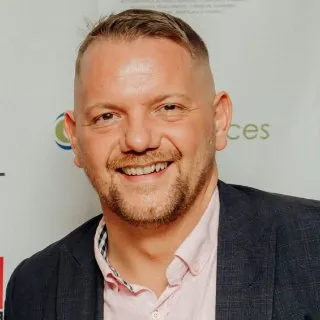
Richie McGregor is a visionary leader with over 17 years of experience driving digital innovation in healthcare. They have consistently delivered transformative solutions by leveraging cutting-edge technologies, including artificial intelligence, to improve patient outcomes and enhance operational efficiency. As a sought-after speaker at industry conferences, Richie has also published numerous articles on the role of technology-enabled care and AI in creating more inclusive, sustainable healthcare systems.