

Healthcare industry faces significant risk from cyberattacks which has surged as an interesting target for cyber criminals throughout the recent years. The fast implementation of healthcare digitization creates numerous possibilities for cybercriminals to observe through sensitive patient information. Breach of cybersecurity system can produce devastating effects on healthcare organizations resulting in patient data disclosure, financial damage and regulatory sanctions and safety threats to patients. The article examines healthcare organizations' status as attractive targets for cybercriminals along with their typical assault methods while explaining effective risk reduction techniques.
The Value of Healthcare Data
Several types of highly sensitive patient healthcare data accumulate and are processed in great volumes by medical institutions.
- Personally Identifiable Information (PII): Names, addresses, Social Security numbers, and insurance details.
- Protected Health Information (PHI): Medical history, lab results, and treatment records.
- Financial Information: Payment details, credit card data, and insurance claims.
Medical records maintain their value on the dark web due to their permanent nature since information inside them cannot be deleted or changed upon breach occurrence. Stolen healthcare data is valuable to cybercriminals because they use it for identity theft along with insurance fraud and blackmail activities to make profits from dark web market deals.
Common Cyber Threats Targeting Healthcare

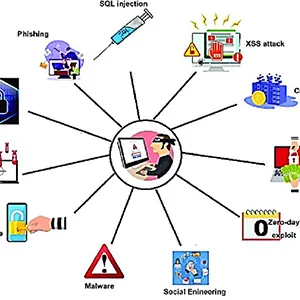
The healthcare sector encounters numerous cyber threats that demonstrate three main groups among them:
1. Ransomware Attacks
Healthcare facilities currently face a severe threat from Ransomware attacks which demonstrates great destructive power. Healthcare networks fall victim when hackers enter through cybercriminal methods to lock up essential medical records then force organizations to pay ransoms as part of their data retrieval demand. Medical services present emergency life situations where many organizations choose ransom payments over letting operations stop.
2. Phishing and Social Engineering Attacks
The cyber criminals perform Phishing attacks against healthcare staff to steal their login information while simultaneously making them install harmful malware. Attackers trick healthcare staff by pretending to be reliable organizations including government bodies and medical suppliers to trick workers into opening dangerous links. Security vulnerabilities in employees lead attackers to manipulate them into granting access to unauthorized systems through social engineering manipulations.
3. Insider Threats
The intentional or unintentional actions of internal personnel create major threats to protect healthcare information. The leaking of sensitive data and the misusing of credentials occurs through employees and contractors as well as third-party vendors who operate with access to confidential information.
4. Medical Device Vulnerabilities
Recently developed IoT (Internet of Things) systems in healthcare provide opportunities for cyberattacks to occur. Pacemakers together with insulin pumps and MRIs currently exist without proper security measures that create opportunities for attackers. A device breach produces both wrong test data and faulty device performance which might endanger patient health in critical ways.
5. DDoS (Distributed Denial-of-Service) Attacks
Industrial-scale denial-of-service (DDoS) attacks generate excessive network traffic that render healthcare systems inoperable and causes complete service interruptions. The attacks block hospitals from reaching their Electronic Health Records which results in delayed essential care procedures while generating disorder throughout healthcare operations.
Why Healthcare Organizations Are Targeted
Healthcare organizations possess several traits which make them desirable objectives for cybercriminals to exploit.
1. A High Volume of Sensitive Data
All healthcare businesses work with substantial amounts of personal records along with medical documents and financial data. Hospitals and clinics serve as profitable targets because criminals can extract financial gain from their stored data.
2. Outdated Systems and Legacy Software
Healthcare facilities are maintaining IT structures which utilize outdated computer software and operating systems that lack security support. Security gaps present themselves due to these vulnerabilities which cybercriminals use to exploit them.
3. Lack of Cybersecurity Awareness and Training
The healthcare sector faces lower cybersecurity awareness compared to financial technologies because its staff members receive insufficient training about best practices. Clicking a single rogue link through phishing represents a basic error which grants unauthorized network access to cyber attackers.
4. High Operational Pressure
The high-pressure work environment of healthcare workers depends on both rapid service delivery and efficient performance. The genuine need for urgency in healthcare settings frequently produces security-related compromises such as employing poor passwords together with credential distribution and unalterable security standard requirements.
5. Regulatory and Compliance Challenges
Healthcare organizations must comply with HIPAA regulations in the USA along with GDPR standards which apply to European territory. Data protection regulations in place impose rules but organizations still battle to achieve complete security due to the constantly changing cyber threats.
6. Willingness to Pay Ransoms
Organizations within the healthcare sector choose to make ransom payments rapidly because their patients' safety needs immediate preservation. The readiness to pay ransom money by organizations motivates cyber criminals to select healthcare as their primary target.
Mitigating Cybersecurity Risks in Healthcare
Several levels of security should be deployed to defend healthcare organizations against cyber threats. Few essential strategies exist to boost cybersecurity resilience through the following organizations:
1. Implement Robust Endpoint Security
Hospitals need to implement complete endpoint defense solutions with antivirus programs together with intrusion detection systems and endpoint detection and response (EDR) tools to secure their networks and discover irregularities.
2. Regular Employee Training and Awareness Programs
Every staff member in healthcare needs to participate in ongoing cybersecurity education which teaches them to identify phishing threats and defensive strategies for social engineering attacks along with proper password security.
3. Enforce Strong Access Controls
The only individuals authorized for access to sensitive medical information must handle this responsibility. Multi-factor authentication (MFA) should establish policy requirements for authentication security that safeguard systems from unauthorized entry.
4. Keep Systems and Software Updated
The Healthcare IT departments need to maintain continuous software update routines for dealing with known security flaws. Healthcare organizations need to replace old systems with new security patches or order their elimination.
5. Secure Medical Devices and IoT
Medical devices need to operate under cybersecurity strategies through implementation of encryption and regular firmware upgrade policies together with network partition techniques to stop unauthorized system access.
6. Backup and Disaster Recovery Planning
Critical data backup operations that run on a regular schedule offer hospitals the possibility to recover their systems after experiencing a ransomware assault. Medical facilities must protect backup data through encryption and should locate it in different networks from the main system.
7. Conduct Regular Security Audits and Penetration Testing
Continuous security assessments alongside penetration tests enable organizations to discover and solve system weaknesses so that attackers cannot seize the chance to exploit them.
8. Collaborate with Cybersecurity Experts
Healthcare institutions must team up with cybersecurity companies together with government departments and industry specialists to learn about developing security risks and proven technical approaches.
Conclusion
Healthcare organizations will persistently remain as main targets for cybercriminals because medical data maintains high value and the sector encounters multiple cybersecurity obstacles. Healthcare institutions protect themselves from risks by implementing strict security protocols which they monitor continuously and which all employees understand about cybersecurity.
Intelligent approaches to security prevention remain essential because advanced cybersecurity threats endanger patient information integrity and regulatory fulfillment as well as medical care protection.