
This is a pivotal time for cancer care across Europe. There were 4.47 million new cancer cases in Europe in 2022, and this number is projected to rise due to the ageing population and a number of increasingly validated lifestyle cancer risk factors, including tobacco use, alcohol, lack of exercise, high body mass index (BMI), poor diet, high blood sugar and a number of environmental exposures. Despite Europe representing only 9% of the global population, it is responsible for over 23% of cancer cases and 20% of cancer deaths worldwide. A recent report highlighted that cancer cases have surged by 30% in the EU since 2000, particularly in women, where cancer cases rose by 16% and mainly driven by breast, thyroid, melanoma and colorectal cancers.
Cancer is now the second-leading cause of death across all European countries, but there are significant geographic disparities across the continent in terms of cancer incidence, mortality and access to cancer services, including cancer screening. For example, while Western and Northern Europe have the highest cancer incidence rates, almost certainly due to established screening programmes and comprehensive healthcare provision, Central and Eastern European countries have higher cancer mortality rates that are likely to be related to reduced access to cancer screening and diagnosis.
The rising European cancer incidence contributes to delays in diagnosis and a later stage at presentation, with patients likely to require more extensive treatment, resulting in worse survival. This pattern of rising cancer incidence and delays to diagnosis has an impact that goes far beyond patient care and poor outcomes, with a financial impact that is now seen worldwide. In a 2025 report by Mercer Marsh, cancer was the leading global health claims cost for insurers in 2024, and is directly linked to the rising cancer incidence, delays in diagnosis, transfer from public to private treatment, increased treatment costs and medical inflation, which is currently running at around 10%.
Increased cancers in the under 50s
Another global phenomenon that has impacted Europe from a cancer perspective has been the rise in patients diagnosed with cancer under the age of 50, with an 80% global increase over three decades from 1990 to 2019. The highest increases were most apparent in breast, colorectal (bowel), stomach and lung cancer and the incidence was highest in countries with higher sociodemographic development, including Europe, North America and Australasia.
Whilst evidence is still emerging about the cause of this rise in the younger population, the report suggests that changing reproductive patterns (breast cancer), increased detection (thyroid cancer) and diet (colorectal cancer) may play a role. It is already recognised that alcohol and obesity increase the risk of breast and colorectal cancer. The lifestyle risk factors associated with the increase in early-onset cancers are the same as those linked to cancer in older patients and outlined above, but these patients are often too young to access cancer screening services and are more likely to experience delays in diagnosis as cancer may not have been considered in the differential diagnosis at such a young age.
Early cancer detection
So, moving forward, the real question is how do we tackle the rising cancer incidence, especially in the under 50s, the delays to diagnosis leading to worse survival and the rising cost of cancer claims given the fiscal constraints facing European countries? Fortunately, all of these individual cancer challenges can be mitigated by a strategy that is focused on early cancer detection. Early detection results in less treatment and better survival for patients, and reduced costs for public healthcare systems or health insurers. There is therefore no conflict in pursuing a strategy that embraces early cancer detection as it benefits patients and payors alike, and it can be delivered by a combination of increased cancer awareness, a shift to cancer prevention through risk factor assessment and risk reduction, cancer screening and rapid diagnosis when symptoms appear.
Unfortunately, pivoting to cancer prevention as part of a wider early cancer detection strategy cannot be delivered overnight. It is widely reported that Denmark has significantly improved its poor cancer survival over the last twenty-five years and that other countries should follow its lead. The initial National Cancer Plan for Denmark, launched in 2000 with all-party political support, has succeeded as a result of a commitment to long-term funding to invest in cancer infrastructure as well as regular updates to the strategy to speed up diagnosis and treatment, while expanding cancer screening programmes. The results mean that 99% of Danish cancer patients can now access treatment within 4 weeks of urgent referral, with a 5-year survival that has risen from around 55-60% in the early 2000s to 72-74% by the early 2020s. The key message, therefore, is that improved cancer survival takes sustained funding and focus over 20 years to provide the infrastructure to ensure that patients are diagnosed and treated quickly despite the rising cancer incidence.

Cancer prevention
It is now estimated that 40% of all cancer cases are attributable to modifiable risk factors and are therefore preventable. These lifestyle risk factors include diet, excess body weight, alcohol, tobacco exposure, lack of physical exercise and exposure to ultraviolet radiation (UVR). Although tobacco use has reduced significantly over the last few decades to around 24% of the European population, almost 60% of European adults are now overweight or obese. Excess body weight is associated with an increased risk of 13 different types of cancer, including colorectal cancer, post-menopausal breast cancer, ovarian cancer, thyroid cancer and male breast cancer. Identification of any lifestyle risk factors that may increase your cancer risk is therefore an important step in reducing your risk by a change in your lifestyle or behaviour. Reducing tobacco use, alcohol consumption and environmental pollution are key pillars of Europe’s Beating Cancer Plan alongside improvement of knowledge and health literacy to promote healthier lifestyles. This Cancer Plan also includes targets for 2030 to achieve 90% HPV vaccination for girls and increase uptake of the hepatitis B vaccination.
Cancer risk assessment can be performed in a variety of different ways, including salivary DNA tests (breast & prostate cancer), genetic testing for inherited cancer-related mutations and questionnaires based on family history, proven risk factors and lifestyle. Once specific risk factors are identified, the most successful risk reduction strategies involve proactive management through programmes that support smoking cessation, weight loss, alcohol reduction and increased exercise. For example, regular physical activity can reduce the risk of colon, breast, kidney, uterine and stomach cancer.
Health insurers are now exploring how best to introduce cancer risk assessment and targeted cancer screening into their range of clinical services, not just to support cancer prevention and early cancer detection but, as part of an overall strategy to reduce their escalating cancer treatment costs. Although there may be an initial cost involved in establishing these services, my own research has shown that there is a return on investment that can be seen within the first five years of implementation due to lower costs from early cancer detection and reduced cancer treatment.
Cancer screening
It is well established that screening can reduce the number of deaths from breast, colorectal (bowel), cervical and prostate cancer by diagnosing these cancers before symptoms appear. Cancer screening, therefore, makes a significant contribution to early cancer detection, improved survival and lower treatment costs for these common cancers.
However, cancer screening can also contribute to cancer prevention by identifying and removing several breast, cervical and colorectal (bowel) high-risk changes before they become cancerous. For example, around 30 pre-cancerous polyps are excised for each bowel cancer detected as a result of screening.
While cancer screening has made a significant contribution to improved survival and cancer prevention, disparities in access and participation persist across Europe, with certain racial/ethnic groups, rural populations, those with a disability and people of lower socioeconomic status all less likely to be up to date with recommended cancer screenings. These health inequalities need to be addressed by all cancer healthcare providers to ensure easy access for all groups.
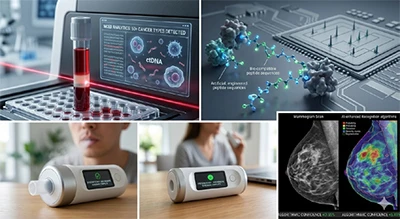
Despite much hype about the role of Multi Cancer Early Detection (MCED) tests in being able to screen for up to 50 tumours with a single blood sample, GRAIL announced in February 2026 that it did not meet its clinical endpoint to reduce stage 3&4 cancers in a recent UK NHS trial of 140,000 patients. This result did not come as a surprise to many cancer clinicians based on the results of the Pathfinder 1 study that reported detection rates in 2023 of 8% for stage 1, 14% for stage 2, 30% for stage 3 and 80% for stage 4 using the Galleri MCED test. These results suggest that this particular MCED test has a very low sensitivity at detecting early-stage cancers and is unlikely to replace traditional screening programmes for common cancers.
Future trends
A recent study in Lancet Oncology (4) reported that 28% of healthy life years lost due to poor health or premature death following a breast cancer diagnosis were due to six potentially modifiable risk factors, including high red meat consumption, tobacco use/exposure, high blood sugar, high BMI, high alcohol consumption and low physical activity. This suggests that the very same risk factors that increase cancer incidence also appear to increase breast cancer mortality. This will have profound implications for general health advice given during and following traditional breast cancer treatment.
The UAE have announced plans to make cancer screening participation mandatory, with federal health authorities planning to link several preventative tests, including cancer screening, to health insurance requirements. I think it is unlikely that this approach will gain traction in Europe. I have considered for some time that insured members who participate in value-based cancer diagnosis pathways (best outcome for lowest price) should benefit from lower annual premiums compared to members who still want to select their own consultant or healthcare provider.
There have been a number of breakthroughs recently in cancer screening. With much discussion regarding how to safely introduce medical AI to clinical pathways, there are very positive signs from two breast screening trials. A Swedish study compared double radiologist reporting with AI-assisted reporting and confirmed less aggressive invasive cancers between screens in the AI arm. A second study reports that the use of artificial intelligence (AI) in breast cancer screening can increase breast cancer detection by 10.4 per cent and has the potential to reduce the workload of healthcare workers by more than 30% compared to the current clinical process. Finally, after 30 years of follow-up, the Gothenburg study of prostate cancer screening using PSA reports that 1 life was saved for every six patients diagnosed with prostate cancer. This is a clear indication of the efficacy of PSA testing, whilst we await the results of further studies that are investigating the role of blood and urinary biomarkers, as well as short MRI scans, for prostate screening
Any new early cancer detection strategy will also require the population to take responsibility for their own health and cancer risk. It should be the role of insurers and/or public/private healthcare providers to deliver the necessary education to allow people to understand their personal risk and to provide access to updated cancer risk assessment, behavioural change programmes, cancer screening and cancer diagnostic pathways that harness the many recent developments in science and technology. If successfully deployed in this way, early cancer detection can provide the backbone of a strategy that focuses on delivery of faster access to patient-centred, high-value cancer care with better patient outcomes and lower costs.
References
1. OECD/European Commission (2026), Delivering High Value Cancer Care: European Cancer Inequalities Registry Analytical Report, OECD Publishing, Paris, https://doi.org/10.1787/060869fe-en.
2. Mercer Marsh Health Trends Report for 2025
3. Zhao et al. Global trends in incidence, death, burden and risk factors for early-onset cancer from 1990-2019. BMJ Oncology 2025; Vol 2, Issue 1.
4. GBD 2923 Breast Cancer Collaborators. Global, regional and national burden of breast cancer among females, 1990-2023 with forecasts to 2050. The Lancet Oncology 2026; Vol 27, Issue 3.
5. Gommers et al. Interval cancer, sensitivity and specificity comparing AI-supported mammography screening with standard double reading without AI in the MASAI study. The Lancet 2026; Vol 407, Issue 10527.
6. de Vries et al. Prospective evaluation of artificial intelligence integration into breast cancer screening in multiple workflow settings: the GEMINI study. Nature Cancer 2026; https://doi.org/10.1038/s43018-026-01126-1.
Read the full article — it's free
Register with EuropeanHHM to unlock expert insights, research articles and in-depth industry analysis.