
Transplantation of human cells, tissues, and organs plays an important role in saving lives and restoring essential functions where no comparable alternatives exist. The process involves matching organs based on various characteristics such as blood type, organ size, urgency, and geographical proximity. The United Network for Organ Sharing (UNOS) manages the national organ transplant waiting list, ensuring fair distribution of organs from deceased donors.
Currently, approximately half a million patients in the United States await organ transplants, with mortality rates rising due to organ scarcity. Deceased or living donors can potentially donate 25 different organs or tissues, including the kidney, liver, pancreas, lungs, and heart. However, finding a perfect organ match remains challenging, with patients facing an average wait time of 3-5 years, or even longer in certain regions.
Despite significant achievements in transplantation, such as over 800,000 transplants performed in the US since 1988, disparities exist between countries in access to transplantation and the quality of donation and transplantation practices. Ethical concerns, including the shortage of organs leading to potential trafficking, remain significant challenges.
To address the organ shortage crisis, regenerative medicine has seen remarkable advancements, particularly in 3D bioprinting. This technology utilizes bioinks containing biopolymers and stem cells to create 3D-printed organs or tissues. These bioengineered structures offer potential solutions for organ transplantation or drug testing, with patient-specific treatments becoming feasible through cell differentiation.
What is 3D bioprinting?
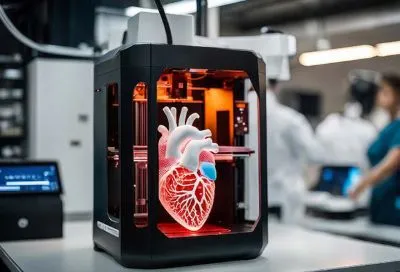
3D bioprinting is an innovative technique that employs biopolymers and stem cells, commonly referred to as bioinks, as materials for constructing three-dimensional (3D) structures resembling actual organs. These bioinks are loaded into a 3D printer, which then deposits them layer by layer to fabricate a 3D organ. These printed organs can be utilized for organ transplants or drug testing purposes, either in vivo or in vitro. Initially, the 3D structure of the tissue or organ is modeled using computer software, followed by the printing of bioinks to create the desired structures. Bioinks typically comprise cultured cells combined with biopolymer hydrogels, such as gelatin or alginate, which provide structural support and protect the living cells during the printing process. Researchers must first determine the specific organ they aim to artificially replicate to create bioinks, then harvest stem cells from the patient. These stem cells, lacking specialized functions, are then induced to differentiate into specific cell types, enabling researchers to develop organ-specific and patient-specific treatments on a larger scale. 3D bioprinting is an industrial manufacturing technology enabling rapid and mass production of components by utilizing computer-aided design (CAD) files to guide the printing process.
What is the potential of 3D Bioprinting in Revolutionizing Organ Transplantation?
3D bioprinting holds significant potential to revolutionize organ transplantation by addressing global organ shortages and improving tissue engineering and regenerative medicine. The technology allows precise control over the deposition of biological components, including biomaterials, stem cells, and biomolecules, in predetermined designs. It offers a solution to the growing need for testing novel tissue fabrication methods and creating advanced disease models. By enabling layer-by-layer deposition of various biomaterials, stem cells, and biomolecules, 3D bioprinting allows for the creation of complex tissue and organ structures with controlled spatial distribution. One of the primary advantages of 3D bioprinting is its ability to fabricate patient-specific organs and tissues, transforming the field of bioengineering and biomedical research. The technique involves directly printing living cells and biomaterials layer by layer according to a CAD model of the desired structure. This enables precise positioning and architectural control of 3D products, including shaping, pore geometry, and interconnectivity, to mimic real human tissue and organs. With its capability for precise cell positioning and patterning, 3D bioprinting has become a powerful tool in tissue engineering and regenerative medicine for fabricating complex, multiscale structures with high reproducibility and repeatability.
What are the challenges in Translating 3D Bioprinting to Clinical Applications?
Despite its potential, there are several challenges associated with translating 3D bioprinting into clinical applications. One major challenge is sourcing cells for bioprinting, especially patient-derived cells, which require time-consuming processes such as cell expansion and achieving a critical mass of cells for printing tissues of the required scale. Additionally, long-term studies in large animal models are necessary to validate the efficacy and safety of bioprinted constructs before clinical translation. Another challenge is the compatibility of bioprinted tissues for long-term storage and transportation, as well as addressing ethical, legal, and social considerations surrounding the use of bioprinted tissues and organs. Regulatory aspects of bioprinting and commercialization also need to be carefully addressed to ensure the safety and efficacy of bioprinted products.
Conclusion
3D bioprinting represents a groundbreaking advancement in tissue engineering and regenerative medicine, offering the potential to create patient-specific organs and tissues for transplantation. While challenges remain, ongoing research and technological innovations hold promise for overcoming these obstacles and realizing the full potential of bioprinting in clinical practice. The integration of 3D bioprinting into mainstream healthcare could revolutionize organ transplantation and medicine, ultimately improving patient outcomes and quality of life.
References
https://www.who.int/health-topics/transplantation#tab=tab_1
https://www.kidney.org/content/understanding-transplant-waitlist#:~:text=Once%20you%20are%20added%20to,geographical%20regions%20of%20the%20country
https://health.ucdavis.edu/transplant/about/unos-and-the-waiting-list.html#:~:text=The%20HLA%20antigens%20of%20the,been%20on%20the%20waiting%20list..
https://www.ncbi.nlm.nih.gov/pmc/articles/PMC3662355/
https://www.ncbi.nlm.nih.gov/pmc/articles/PMC8682823/
https://www.webmd.com/a-to-z-guides/organ-transplant-overview
https://builtin.com/3d-printing/3d-printed-organs
https://www.ncbi.nlm.nih.gov/pmc/articles/PMC8252697/
https://healthmatch.io/blog/3d-printed-organs-are-the-future-of-transplantation
https://www.frontiersin.org/articles/10.3389/fbioe.2021.773511/full