

Why core temperature still isn’t “solved”
Temperature has been a foundational vital sign for more than a century, yet the way we measure and use it often lags behind clinical needs and modern workflows. In perioperative care, preventing inadvertent hypothermia and maintaining normothermia are explicit guidelines; in emergency and critical care, early detection of fever or hypothermia can change outcomes; and in infectious disease control, rapid screening at scale can inform decisions in minutes. Still, conventional methods demand frequent manual checks, contact-based probes, and consumables—and in many care settings (busy wards, triage, home monitoring, or austere environments) that creates friction, gaps, and avoidable risk. NICE explicitly recommends frequent temperature measurement before, during, and after surgery to prevent complications, underscoring how central temperature is to routine, guideline-driven care.
A new generation of sensor systems—autonomous, contactless, and designed for continuous use can help close these gaps. As an engineer and founder working on a sensor-based medical robot for core body temperature monitoring, I’ve seen how robust sensing, validation, and data integrity can transform temperature from a “snapshot” into a high-value signal stream that improves decisions, documentation, and automation.
The case for contactless & remote monitoring
Fewer touch points, less workload, more coverage: Contactless systems reduce the need for staff to place and replace probes, cutting interruptions and infection-control concerns while increasing measurement frequency. In real wards and ICUs, nurses routinely juggle dozens of tasks; automating temperature checks can reclaim time for higher-value care.
Better adherence to guidelines: Perioperative guidance calls for active maintenance of normothermia and frequent measurements around anesthesia and recovery. Continuous, automated sensing makes guideline adherence practical rather than aspirational.
Remote patient monitoring (RPM) that actually helps: Evidence syntheses suggest RPM can be feasible, acceptable, and associated with reductions in utilisation in select populations when implemented well. Temperature is a core input to early-warning algorithms and deterioration indices; capturing it continuously at home or step-down can enable earlier intervention. (Agency for Clinical Innovation, WIRED)
Built for scale—inside and outside the hospital: Field hospitals, humanitarian missions, and mass-casualty triage need low-touch, repeatable measurements that work when staff are constrained and PPE is heavy. Autonomous, contactless systems can extend monitoring to more patients with fewer people.
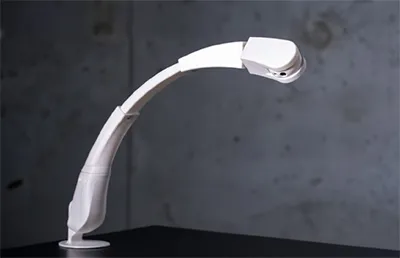
But is “contactless core temperature” real?
The reference (“gold standard”) for true core temperature is pulmonary artery blood temperature—accurate but invasive and impractical for routine use. In practice, hospitals rely on clinically validated proxies such as esophageal, bladder, and rectal measurements; rectal temperature is widely accepted as a reliable core proxy in many settings, but it remains contact-based and workflow-intensive. Non-contact forehead thermometers, by contrast, are convenient for screening, yet systematic reviews have highlighted accuracy variability versus core temperature, especially in fever detection, and even in ICU patients. Any contactless system that claims “core-level” performance must therefore demonstrate rigorous validation against accepted core proxies in the target setting (ICU, OR, ward).
Emerging approaches improve on traditional non-contact thermometry by combining:
• High-fidelity infrared sensing (calibrated optics, controlled distance/angle, ambient compensation),
• Physiological modeling (skin-to-core transfer functions that adapt to perfusion/vasoconstriction states), and
• Noise-reduction & data integrity layers (motion handling, outlier rejection, and tamper-evident logging).
This stack can bring contactless readings closer to the accuracy of rectal or esophageal probes—if and only if it’s validated against those proxies in the same clinical environment and population. (Our own testing roadmap emphasises ICU and perioperative use precisely for that reason.)
Workflow wins: from bedside to back office
Autonomous capture and charting: Temperature recorded on schedule (or continuously), cross-checked by algorithms, and pushed to the EHR using open standards (e.g., HL7® FHIR® Observation resources with LOINC® codes for body temperature) reduces omitted charting and manual entry errors. That’s not just convenient; it underpins auditability, quality metrics, and research.
Tamper-evident data for trials and QA: Clinical trials demand source-verifiable, unaltered measurements. A device that signs data at capture, time-stamps it, and maintains an immutable audit trail provides confidence that temperature endpoints weren’t mis-read, mis-timed, or transcribed incorrectly—advantages over paper logs and ad-hoc checks.
Perioperative value: Anesthesia societies call for ongoing evaluation of temperature when significant changes are anticipated (e.g., long cases, pediatric, large fluid shifts, cold environments). Automated sensing can reduce inadvertent hypothermia, a contributor to wound infection, coagulopathy, and prolonged recovery.
Field medicine and dual-use scenarios
Combat casualty care and hypothermia: Military protocols emphasise early prevention and monitoring of hypothermia to improve survival in trauma. In forward settings—where staffing and time are scarce—contactless, autonomous temperature monitoring can extend continuous surveillance without adding lines or probes.
CBRN and high-PPE environments: In chemical/biological incidents or infectious-disease isolation, minimising contact and donning/doffing cycles is critical. Temperature is both a screening and monitoring parameter; contactless collection helps preserve PPE and reduce exposure while maintaining frequency.
Mobile/temporary hospitals: When power and staff are limited, devices that operate autonomously, work at a short distance (e.g., bedside boom, gantry, or robot), and backhaul data over resilient links enable “ICU-like” observation density in tents or repurposed facilities.
The next frontier: enabling more automated, robot-assisted surgery
Robotic surgery and tele-surgery rely on a tightly integrated loop of sensing, decision support, and actuation. Core temperature is a key safety parameter during anesthesia: cooling, irrigation, insufflation gases, and ambient conditions can all drive patients toward hypothermia. Today, maintaining normothermia generally requires staff to place temperature probes and manually coordinate warming interventions. A validated, contactless temperature system integrated into the anesthetic and robotic stack could:
• Continuously feed core-equivalent estimates into the anesthesia record,
• Trigger automated warming protocols (forced-air blankets, warmed fluids), and
• Alert earlier to adverse shifts, even during remote or highly automated procedures.
To be clear, we are not claiming such systems are standard today; rather, we outline a credible path where validated, contactless core-temperature sensing becomes a building block for safer, more automated perioperative care.
Design pillars for trustworthy contactless temperature systems
1) Clinical accuracy with published validation
Benchmark against accepted core proxies in the exact settings of use (ICU, OR, ward). Publish bias/precision versus reference (e.g., Bland–Altman) across perfusion states, skin tones, age groups, and motion conditions. External, multi-site studies are especially important given prior limitations noted for off-the-shelf infrared devices.
2) Data integrity and security by design
Record measurements with cryptographic signatures, secure clocks, and audit trails. Encrypt at rest and in transit. Role-based access and immutable logs support clinical trials, QI audits, and medico-legal documentation.
3) Interoperability with open standards
Use HL7 FHIR Observation for temperature and IEEE 11073-20601/-10206, where applicable for device communication and plug-and-play integration. This reduces integration cost and future-proofs the stack.
4) Human-factors and automation
Design for near-zero workflow burden: self-positioning or fixed-mount devices that handle distance/angle, ambient compensation, and motion detection, with clear operator feedback when data quality is insufficient. Pair with rules/ML that translate readings into actionable prompts (e.g., “maintain forced-air warming,” “re-check in 5 minutes”).
5) Regulatory strategy aligned to use case
Positioning as a continuous monitoring device versus a screening tool changes evidence expectations. Align indications, validations, and risk controls to the target market (perioperative monitoring, ICU, clinical trials, field use).
Evidence snapshots and what they imply
• Infrared/tympanic devices: Convenient, but accuracy versus core varies by device, technique, and patient condition; caution is needed for fever detection in critical care. Translation: new contactless systems must prove accuracy head-to-head with core proxies, not infer it.
• Zero-heat-flux sensors: A non-invasive approach that can approximate the core with good accuracy in stable OR conditions. Translation: Non-invasive core estimation is possible; approach and context matter.
• Perioperative guidance: (NICE, ASA): frequent monitoring and active warming improve outcomes; continuous data would make adherence easier and more reliable. Translation: automation aligns with existing standards.
• RPM & Hospital-at-Home: When implemented well, remote vital-sign monitoring can be safe and associated with lower utilisation and high satisfaction. Translation: reliable temperature streams are valuable beyond the hospital’s walls.
Field deployment: practical considerations
Ruggedisation & power: Field use requires devices that tolerate vibration, dust, and thermal extremes. Battery-backed operation and low-power modes keep monitoring active during generator swaps.
Distance and alignment: Optical sensors need predictable geometry. Fixed mounts over cots, rail-guided booms, or compact bedside robots can maintain the correct field of view without staff intervention.
Connectivity: Store-and-forward transmission with opportunistic sync is essential where connectivity is intermittent. On-device summaries (e.g., trend arrows, thresholds) help staff act even when offline.
Ethics & privacy: Continuous monitoring raises issues of consent and surveillance. Clear policies, visible indicators when active, and strict purpose limitation are essential—especially outside the hospital.
Looking ahead: temperature as a foundation signal for AI
Continuous, trustworthy temperature streams are a powerful feature for early-warning systems, sepsis detection, and post-op risk prediction when combined with heart rate, respiration, and blood pressure. AI models trained on clean, time-aligned data can detect subtle pattern shifts—if the inputs are accurate and untainted. Building that “sensor-to-insight” pipeline with device-level integrity, standard interfaces, and transparent performance reporting will define the winners in this space.
Contactless, autonomous temperature monitoring is more than convenience—it’s a practical way to make guideline-driven care achievable, to extend monitoring to places and populations that lack staff or supplies, and to feed safer automation from the OR to the field. The technology is ready to matter, provided we insist on clinical-grade validation, interoperability, and integrity from sensor to system.
References
1. Ahmedov M., Iskrenov T., Minev I, et al. A New Approach to Contactless Core Temperature Monitoring with Noise Elimination Methods. International Journal of Biomedical Science and Engineering, 2025. (Conceptual and experimental basis for a contactless, core-equivalent method.)
2. NICE. Hypothermia: prevention and management in adults having surgery. Recommendations on pre-, intra-, and post-operative temperature monitoring.
3. American Society of Anesthesiologists. Standards for Basic Anesthetic Monitoring. Temperature evaluation when clinically significant changes are anticipated.
4. Niven DJ, et al. Accuracy of peripheral thermometers for estimating temperature of acutely ill adults: systematic review and meta-analysis. BMJ. (Accuracy limitations of non-contact/peripheral devices vs core.)
5. Kimberger O, et al. Tympanic temperature and the influence of ambient temperature in critically ill adults. (ICU accuracy considerations for infrared devices.)
6. Kimberger O, et al. Zero-heat-flux thermometry for non-invasive core temperature measurement. (Evidence that non-invasive approaches can approximate core in perioperative care.)
7. Joint Trauma System (DHA). Hypothermia Prevention & Management Guidelines. Emphasis on temperature control in combat casualty care.
8. Agency for Clinical Innovation (NSW Health). Remote patient monitoring: Evidence check. (RPM feasibility and outcomes overview.) (Agency for Clinical Innovation)
9. HL7®. FHIR®: Observation/vitals profile. (Standards for representing temperature in EHRs.)
10. HL7®. LOINC® 8310-5 Body temperature. (Coding for interoperability.)