
A Humble Beginning: The Dawn of AI in Healthcare
AI’s integration into healthcare began as early as the 1950s, driven by curiosity and the dream of machines that could mimic human intelligence. While early AI was largely theoretical, the idea of using computational tools to assist with medical decision-making gained traction in the 1970s and 1980s.
One of the first major breakthroughs was MYCIN, an expert system developed in 1972 to help diagnose bacterial infections and recommend appropriate antibiotics. Although MYCIN never made it to clinical practice due to technical and regulatory challenges, it proved that machines could analyze medical data to support decision-making. This laid the foundation for future AI innovations.
In the 1980s and 1990s, the rise of electronic health records (EHRs) provided a treasure trove of data for AI systems to process. While early attempts at automation were clunky and prone to error, they hinted at the potential for AI to streamline administrative tasks and reduce human error. During this time, AI’s role in healthcare was more of an assistant than a decision-maker, but the seeds of innovation were firmly planted.
The Turn of the Century: AI Gains Momentum
The 2000s marked a turning point for AI in healthcare, driven by advancements in computing power, data storage, and machine learning algorithms. For the first time, AI moved beyond simple rule-based systems to more adaptive, learning-based models that could analyze vast datasets with increasing accuracy.
• Medical Imaging: One of AI’s earliest practical applications was in radiology. Algorithms capable of identifying anomalies in medical images like X-rays, CT scans, and MRIs began assisting radiologists. These tools were not perfect, but they demonstrated AI’s ability to enhance human judgment and reduce diagnostic errors.
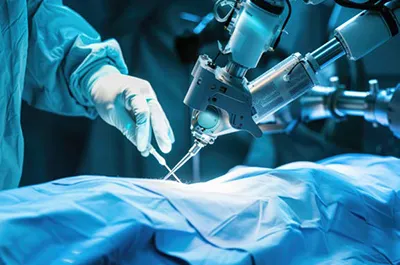
• Robotic Surgery: In the operating room, robotic systems like the da Vinci Surgical System introduced a new era of precision and minimally invasive surgery. While these systems were not fully autonomous, they leveraged AI to assist surgeons in complex procedures, reducing complications and speeding up recovery times for patients.
• Personalized Medicine: Advances in genomics during this period allowed AI to start contributing to personalized medicine. By analyzing genetic information alongside clinical data, AI systems began identifying patterns that could predict a patient’s response to specific treatments. This marked the beginning of a shift towards more individualized care.
The 2010s: AI Becomes a Mainstay in Healthcare
The last decade saw AI become an integral part of healthcare, touching nearly every aspect of patient care. With the advent of deep learning, natural language processing (NLP), and big data analytics, AI systems became more powerful, flexible, and applicable to real-world scenarios.
1. Diagnostics Revolutionized AI-powered tools like IBM Watson Health brought unprecedented capabilities to diagnostics. By analyzing EHRs, clinical guidelines, and research studies, these systems provided physicians with actionable insights. For example, AI began helping oncologists identify cancer types and treatment pathways, significantly improving accuracy and outcomes.
2. Telemedicine Takes Off AI became a cornerstone of telemedicine platforms, enabling virtual consultations that bridged the gap between patients and providers. AI chatbots, symptomcheckers, and triage tools allowed patients to access healthcare advice anytime, anywhere. These tools gained even more traction during the COVID-19 pandemic, as in-person visits became challenging.
3. Remote Monitoring and Chronic Care Management Wearable devices like Fitbit, Apple Watch, and continuous glucose monitors incorporated AI to track vital signs and alert patients to potential health issues. This empowered individuals to take control of their health and enabled doctors to monitor chronic conditions like diabetes and hypertension remotely.
4. Predictive Analytics and Risk Stratification AI-driven predictive analytics helped healthcare providers identify at-risk patients for conditions like sepsis, heart disease, or hospital readmissions. By analyzing patterns in patient data, AI allowed for earlier interventions, reducing complications and saving lives.
5. Responding to the Pandemic The COVID-19 pandemic showcased AI’s ability to analyze infection trends, predict resource needs, and accelerate vaccine development. AI tools helped public health officials and researchers respond faster and more effectively to the global crisis.

The Impact on Patients
The advancements in AI have had tangible benefits for patients worldwide. These include:
• Faster and More Accurate Diagnoses: AI’s ability to analyze medical images and patient data has shortened diagnostic timelines and reduced errors, particularly in lifethreatening conditions like cancer and strokes.
• Improved Accessibility: Telemedicine and AI-powered tools have brought healthcare to underserved and remote areas, ensuring more people can access quality care.
• Personalized Treatment Plans: AI has enabled doctors to design treatment plans tailored to individual patients, increasing the likelihood of successful outcomes.
• Empowered Patients: Wearable devices and health apps have given patients greater control over their health, promoting proactive management of chronic conditions.
• Streamlined Care: Automation of administrative tasks has reduced inefficiencies, allowing healthcare providers to focus more on patient interactions.
While these benefits are undeniable, challenges remain. Data privacy, ethical concerns, and the need for robust regulations must be addressed to ensure AI’s safe and equitable use in healthcare.
Possible Hurdles and Drawbacks
Despite its transformative potential, AI in healthcare is not without challenges. One of the most pressing concerns is data privacy. With AI systems relying heavily on patient data, ensuring that this information remains secure and compliant with regulations like HIPAA and GDPR is paramount. Breaches or misuse of data could erode trust in AI technologies.
Another challenge is bias in AI algorithms. Since AI systems are trained on historical data, they may inadvertently perpetuate existing biases, leading to disparities in care. For example, if datasets are not representative of diverse populations, the AI system’s recommendations may be less accurate for certain groups.
Integration hurdles also pose a significant barrier. Many healthcare facilities struggle to integrate AI systems with existing electronic health records and workflows, creating inefficiencies instead of resolving them. Additionally, the cost of implementation can be prohibitive, particularly for smaller hospitals or clinics with limited budgets.
Lastly, there is the issue of human oversight. While AI can assist clinicians, overreliance on AI systems without proper human validation could lead to errors or missed nuances in patient care. Striking the right balance between automation and human expertise is essential for AI to achieve its full potential in healthcare.
The Next Five Years: What to Expect
As we look ahead, the future of AI in patient care is promising but grounded in realistic advancements. Here are some key developments we can anticipate:
1. Enhanced Diagnostics AI tools will become even more precise in diagnosing conditions from medical images, pathology slides, and genomic data. For example, AI could help detect earlystage cancers that are currently difficult to diagnose, leading to better outcomes.
2. Integrated Clinical Decision Support AI will become seamlessly integrated into electronic health records, providing real-time recommendations to clinicians. These tools will help doctors make informed decisions faster, particularly in complex cases.
3. Advanced Remote Monitoring Wearable devices will evolve to provide more comprehensive health monitoring. AI-powered sensors could detect early signs of complications in chronic conditions, allowing for timely interventions without the need for hospital visits.
4. Telemedicine 2.0 Telemedicine platforms will incorporate more AI-driven features, such as virtual diagnostic tools and real-time language translation, making remote consultations even more effective.
5. Personalized Preventive Care AI will analyze lifestyle, genetic, and clinical data to predict health risks and recommend personalized preventive measures. For instance, AI could alert a patient about an increased risk of heart disease and suggest lifestyle changes or screening tests.
6. Accelerated Drug Development AI will continue to revolutionize pharmaceutical research by identifying promising drug candidates faster and predicting their efficacy. This could lead to more affordable and accessible treatments for rare and complex diseases.
7. Mental Health Support AI-based tools for mental health will become more effective, offering scalable solutions for detecting and addressing conditions like depression and anxiety. These tools could augment traditional therapy or provide support in areas with limited mental health services.
8. Ethical and Regulatory Advances As AI becomes more prevalent, regulatory frameworks will evolve to ensure patient safety, data privacy, and ethical use. These standards will build public trust and facilitate the broader adoption of AI in healthcare.
Conclusion
The story of AI in patient care is one of innovation, collaboration, and hope. From its early days as a theoretical concept to its current role as a life-saving tool, AI has profoundly transformed how we approach healthcare. Over the next five years, its impact will only deepen, as advancements in diagnostics, personalized care, and remote monitoring continue to improve patient outcomes.
While challenges remain, the potential for AI to empower both patients and providers is immense. By addressing ethical concerns, ensuring robust regulations, and focusing on realworld applications, we can look forward to a future where AI helps healthcare become more accessible, efficient, and compassionate than ever before. Together, we can harness the power of AI to create a healthier world for all.